
SaaS Isn’t Just Software. It’s Infrastructure
For most B2B founders, the dream of “recurring revenue” is what fuels the fire. You aren’t just building a tool; you’re building a digital asset that earns while you sleep. However, many entrepreneurs approach the SaaS platform development cost with the same mindset as building a standard mobile app or a static website.
That is a dangerous—and expensive—misconception.
A standard mobile app is often a “standalone” product. A SaaS platform, however, is a living, breathing ecosystem. It requires a foundation that can handle hundreds of different companies (tenants) simultaneously, secure their data in isolated silos, and manage complex billing cycles—all while maintaining 99.9% uptime. When you are building a SaaS budget, you aren’t just paying for the buttons your users click; you are paying for the invisible infrastructure that allows your business to scale from your first ten customers to your ten-thousandth without the code collapsing under its own weight.
At Vedhas Technology, we specialize in building “Investor-Ready” SaaS architectures. We’ve seen too many founders forced to “re-platform” (rebuild from scratch) because their initial V1 wasn’t built for multi-tenancy.
Our SaaS Project Estimator is designed to pull back the curtain on these complexities. It doesn’t just count features; it calculates the engineering hours required to build a robust, revenue-generating engine that satisfies both your users and your future investors.
The Architectural “Triad”: What Actually Drives the Price?
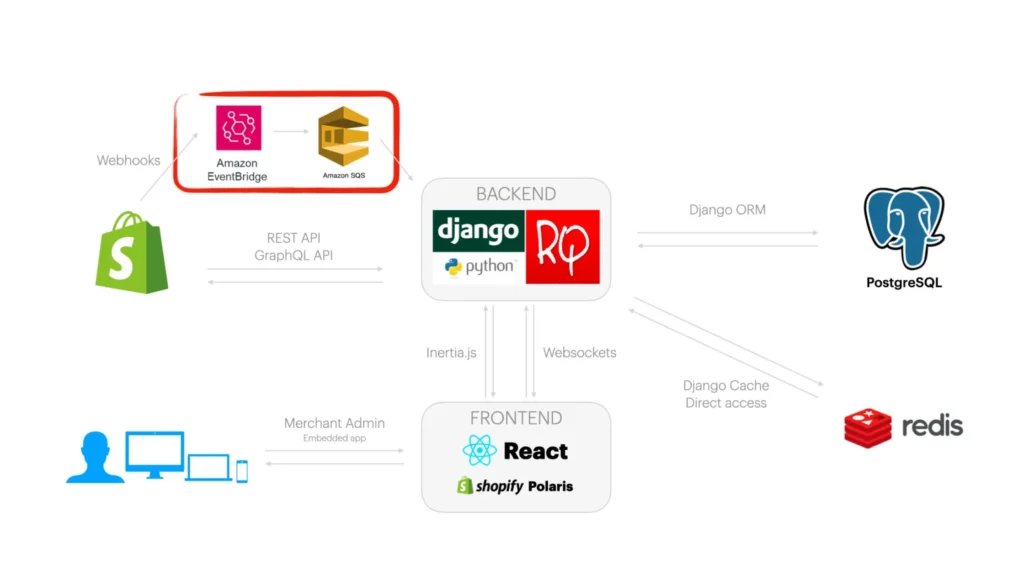
To understand where your capital is going, you must look behind the curtain. Business owners often over-index on the part of the software they can see—the User Interface. A successful SaaS platform is a “Triad” of three distinct products, each requiring a different engineering skillset.
When we are building a SaaS budget, we divide the effort across these three pillars:
- The Backend Engine (The Core): This is the brain of your operation. It handles the “heavy lifting”—data processing, security protocols, API connections, and the complex logic that makes your software unique. While it has no “buttons” for a user to click, this is where most of your engineering hours are spent. It ensures that when 500 users perform a task simultaneously, the system remains fast and stable.
- The Admin Control Center (The Mission Control): This is the product your team uses. To run a SaaS business, you need an internal interface to manage user permissions, monitor subscription health, view analytics, and handle support tickets. A common mistake is neglecting this “hidden” app, only to find you can’t manage your customers once you launch.
- The User Interface (The Frontend): This is the “storefront.” It’s the dashboard your customers log into every day. While crucial for retention and “wow factor,” the UI is essentially a skin that sits on top of the Backend Engine.
In a typical enterprise build, the User Interface might only represent 25% of the total effort, while the Backend and Admin Hub consume the remaining 75%. Recognizing this distribution is the first step toward building a realistic and sustainable roadmap for your platform.
Multi-Tenancy & Data Isolation (The Security Factor)
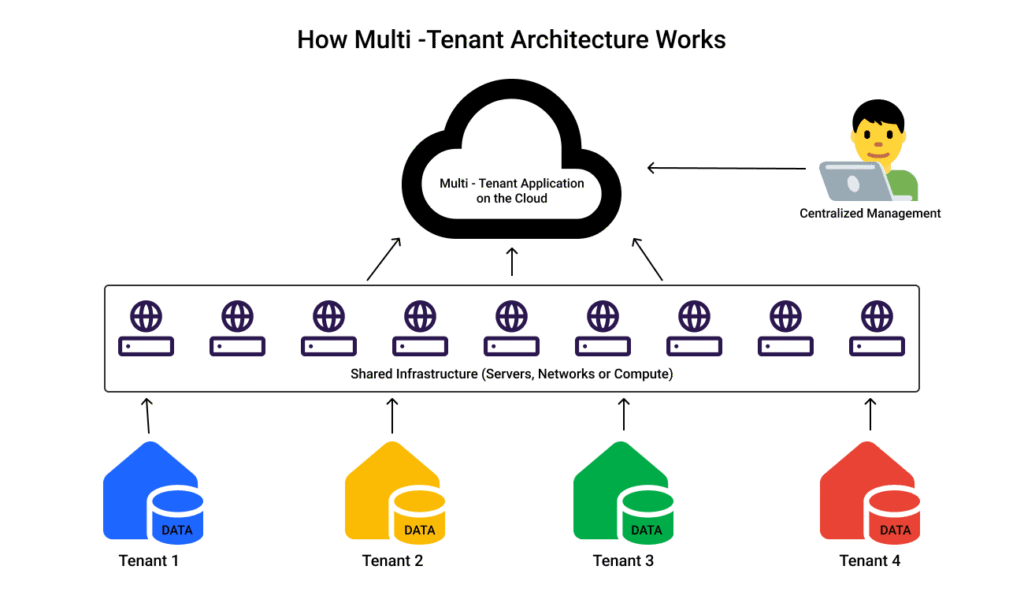
The defining characteristic of a SaaS platform—and the primary reason cloud-based software development pricing is higher than a standard website—is multi-tenancy.
To understand this, think of the difference between a private house and an apartment building. Building a standalone app is like building a house: you have your own foundation, plumbing, and walls. Building a SaaS, however, is like building a high-end apartment complex. All your customers (tenants) share the same “foundation” (the core codebase) and “utilities” (the server infrastructure), but they must remain strictly isolated from one another.
If “User A” from one company can see even a glimpse of “User B’s” data from a competing company, your business is over. Ensuring this isolation requires sophisticated engineering at the database level:
- Row-Level Security (RLS): We write complex policies, so the database itself blocks any data request that doesn’t match the specific tenant’s ID.
- Database Partitioning: For high-security B2B platforms, we may even create separate “schemas” or logical silos to ensure data never physically touches.
- Encrypted Tunnels: Ensuring that data is not just isolated while sitting still, but also while moving through the platform.
At Vedhas, we prioritize this “Enterprise-Ready” architecture from Day 1. While some lower-cost agencies might cut corners here to show you a “working” demo faster, we know that fixing a broken multi-tenant architecture later is nearly impossible. We build the “apartment walls” thick and secure from the start, ensuring you can pass the rigorous security audits required by enterprise-level clients.
Subscription & Billing Logic (The Revenue Engine)
If multi-tenancy is the foundation of your SaaS, then the subscription and billing engine is its heartbeat. Many founders underestimate the complexity here, assuming a simple “Buy” button is enough. However, building a flexible, automated revenue engine is a critical component when building a SaaS budget.
In a B2B SaaS environment, billing is rarely static. Your platform needs to handle a variety of “Business Logic” scenarios that a standard e-commerce store never touches:
- Tiered Pricing & Seat Management: As your clients grow, they may need to move from a “Basic” tier to an “Enterprise” tier or add more “seats” (users) to their account.
- Prorated Billing: What happens if a client upgrades their plan halfway through the month? Your code must calculate exactly how much extra to charge based on the remaining days.
- Freemium & Trial Management: Automatically transitioning users from a free trial to a paid plan—or “locking” their features if a payment fails—requires deep integration with your backend logic.
- Tax Compliance & Invoicing: For US-based SaaS companies, handling state-by-step sales tax and generating professional, automated invoices is a legal necessity.
At Vedhas, we don’t recommend “reinventing the wheel.” We specialize in deep integrations with industry leaders like Stripe or Chargebee. While using these tools lowers your build time, the “piping” required to connect your app’s permissions to the billing status is still a high-precision engineering task.
A robust billing engine ensures that you get paid accurately and on time, without having to manually manage a single spreadsheet. It’s the difference between a project that feels like a hobby and a platform that operates like a business.
The Admin Hub (The Forgotten Cost)
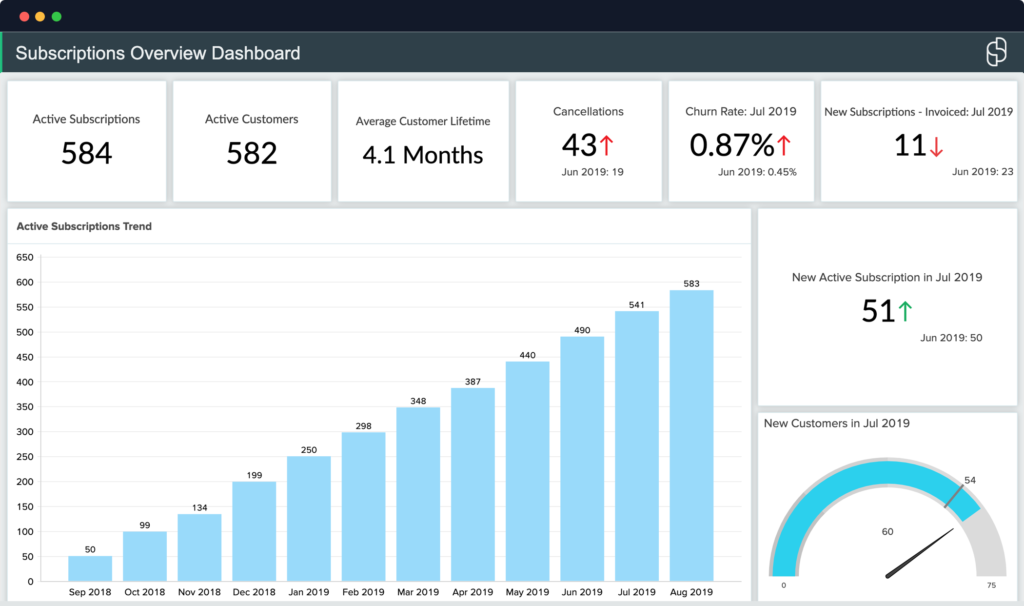
When founders calculate their SaaS platform development cost, they often forget the most important user of the system: themselves. To run a successful recurring revenue business, your team needs a “Mission Control” center—a private dashboard that allows you to manage the entire platform without touching a single line of code.
In the industry, we call this the Admin Hub, and it is often the “hidden” driver of your development budget. Without it, your operations will grind to a halt the moment you sign your tenth customer. At Vedhas, we prioritize three core modules within this internal engine:
- User & Tenant Management: The ability to “impersonate” a user to help them with a bug, reset passwords, adjust subscription tiers, or manually onboard a high-value enterprise client.
- System Health & Usage Monitoring: Real-time visibility into how much server data your customers are consuming. If a specific tenant is using 90% of your resources, you need to know so you can up-sell them to a higher tier or optimize your infrastructure.
- Support & Helpdesk Integration: A centralized place to manage customer inquiries and view their history so your support team has the context they need to provide “White Glove” service.
The Vedhas Insight: Start Lean. We often recommend our clients build a “Lean Admin” for their MVP. Instead of building a complex, beautiful interface for internal use, we focus on the raw functionality—database access and essential controls. This allows you to preserve your capital for the customer-facing features that drive sales, while still maintaining full operational control.
Estimating the SaaS MVP: Basic vs. Enterprise-Ready
One of the most frequent questions we hear from B2B founders is: “Do I need everything on Day 1?” The answer depends entirely on your target market. The SaaS platform development cost shifts dramatically depending on whether you are selling to a small business (SMB) or a Fortune 500 corporation.
At Vedhas, we help our clients categorize their build into two distinct tiers to ensure they aren’t over-engineering for a market that doesn’t require it yet.
The Basic SaaS MVP (The “Speed-to-Market” Build)
This version is designed for B2B startups looking to validate a core problem. It focuses on the primary value proposition with “standard” infrastructure.
- Access Control: Simple user roles (Admin vs. User).
- Reporting: Standard dashboards with basic data visualizations.
- Security: Standard SSL and encrypted databases.
- Best For: Validating a new concept, early-stage startups, and platforms targeting individual professionals or small teams.
The Enterprise-Ready SaaS (The “High-Stakes” Build)
If your customers are IT Directors or Procurement Departments at large companies, a “Basic” build will fail their vetting process. They require features that focus on control and accountability.
- Role-Based Access Control (RBAC): Granular permissions that allow an admin to control exactly which buttons every single employee can click.
- Single Sign-On (SSO): Integration with tools like Okta or Azure AD so their employees can log in using company credentials.
- Audit Logs: A complete “history book” of every action taken within the platform—essential for legal and compliance departments.
- Public API: Allowing their internal dev teams to pull data from your platform into their own systems.
The Vedhas Personalization: We don’t just ask you what you want to build; we ask who you are selling to. If your goal is to close $50k/year enterprise contracts, the SaaS platform development cost will include these “trust features” because they are the barrier to entry. If you are testing a $20/month tool, we’ll steer you toward a Lean MVP to preserve your runway.
Scaling Costs: Designing for the 1,000th Customer
A common pitfall in building a SaaS budget is failing to plan for success. There is a profound engineering difference between an application that works for ten users and a platform that maintains its speed when one thousand organizations are hammering your servers simultaneously.
When we discuss SaaS platform development cost in the context of growth, we focus on how the architecture handles increased load. This is where the distinction between “cheap code” and “scalable code” becomes clear.
- Vertical Scaling (The Quick Fix): This is like adding more floors to a single building. You simply buy a “bigger” server. It’s easy to do but has a hard ceiling. Eventually, the server becomes too expensive or physically cannot get any larger.
- Horizontal Scaling (The Vedhas Way): This is like building more apartment complexes across the city. We design your backend to be “stateless,” meaning we can instantly spin up ten new servers to handle a traffic spike and then turn them off when they aren’t needed. This keeps your monthly cloud bill optimized while ensuring zero downtime.
The “Performance Debt” Trap
If you choose the lowest bidder for your SaaS build, they will likely ignore “Database Optimization” and “Caching Strategies.” This results in what we call Performance Debt. Your app will feel fast on Day 1, but by Day 100, the database queries will become sluggish, and your cloud costs will skyrocket.
At Vedhas, we invest in “Elastic Infrastructure” from the beginning. By utilizing containerization (like Docker/Kubernetes) and serverless functions, we ensure that your cloud-based software development pricing stays proportional to your revenue. You shouldn’t be penalized for growing; your technology should be the engine that makes growth possible.
The Vedhas “SaaS Accelerator” Advantage
Building a B2B platform in the US market requires a delicate balance: you need a technical partner who understands high-stakes enterprise requirements, but you also need to manage your SaaS platform development cost to ensure a healthy runway.
This is where the Vedhas Hybrid Model creates an unfair advantage for our clients. We combine the high-level strategic advisory of a US-based team—experts who understand the nuances of the American B2B landscape—with the engineering depth and efficiency of our global development centers.
- Investor-Ready Code: We build with “due diligence” in mind. Whether you are looking for a seed round or an exit, your codebase will stand up to the most rigorous technical audits.
- Cost-per-User Optimization: We don’t just build features; we optimize your cloud architecture, so your profit margins remain high as you scale.
- Speed to Market: Our pre-built SaaS frameworks for billing, multi-tenancy, and admin management allow us to cut months off your development timeline without cutting corners on quality.
Conclusion: Build for Recurring Success
Your SaaS platform is more than just a piece of software; it is the engine of your business. By understanding that you are building a SaaS budget for infrastructure, security, and scalability, you move from a “project” mindset to a “platform” mindset.
Don’t let your growth be limited by a foundation that wasn’t built to scale. Whether you are building a lean MVP to prove a concept or an enterprise-grade platform to disrupt an industry, the key is transparency in your planning and precision in your execution.
Ready to see the real numbers behind your vision?
Stop guessing and start planning. Use our data-backed estimator to calculate a realistic, transparent budget for your recurring revenue engine.