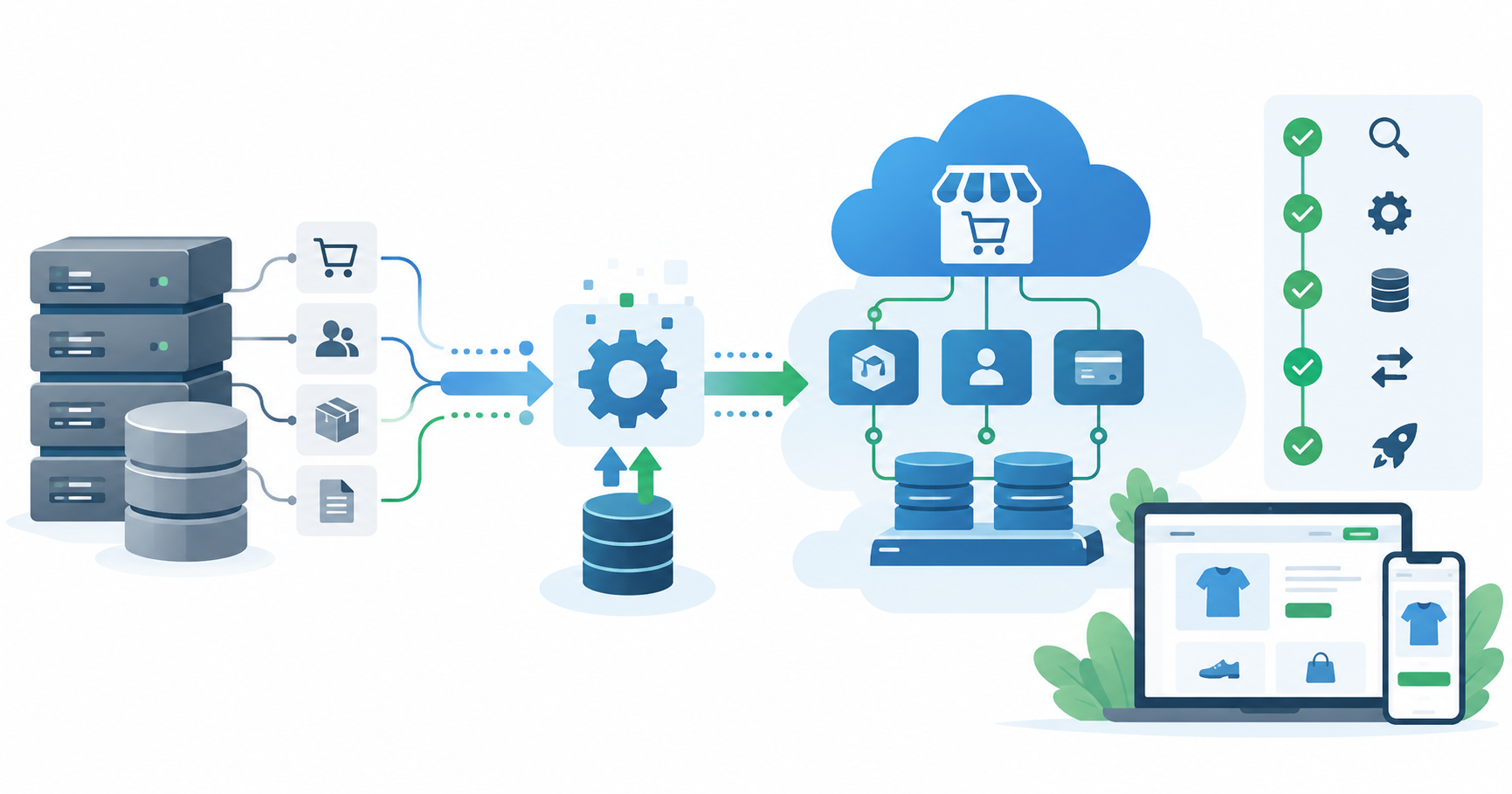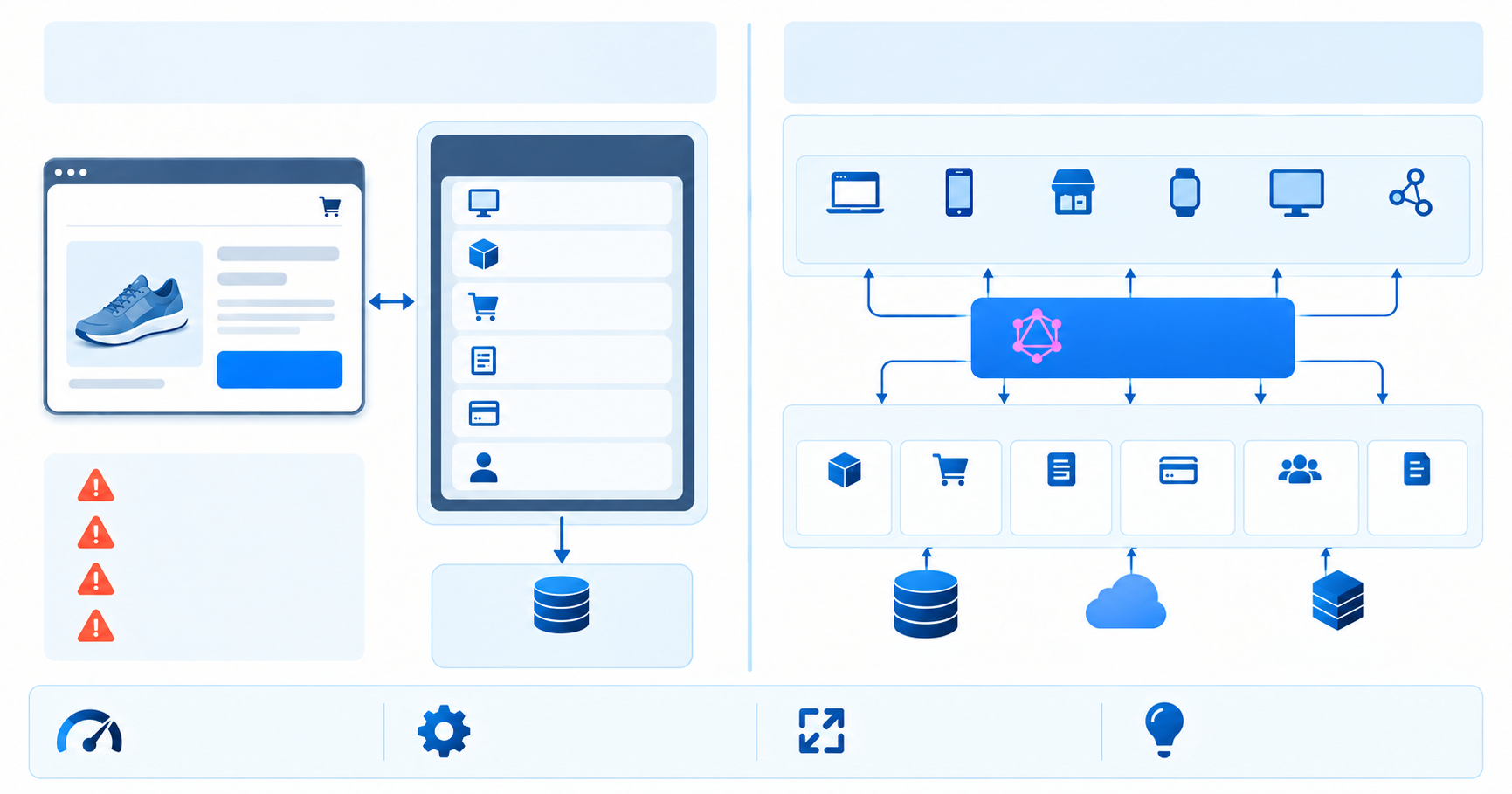
The global enterprise software market has entered a transformative era where the distinction between a market leader and a laggard is defined by the speed at which a legacy codebase can be modernized. By mid-2026, the application modernization market is projected to expand to nearly $30 billion, driven by the urgent need to transition from “digital anchors” to AI-ready assets. At the center of this transition is AI-Augmented Code Refactoring, a systematic methodology that leverages specialized agents and deterministic analysis to transform aging systems into high-performance, cloud-native platforms.
For the modern Chief Technology Officer (CTO), the adoption of AI-Augmented Code Refactoring is no longer a technical luxury but a survival requirement, as the global outages of recent years have exposed the extreme fragility of outdated, tightly coupled legacy systems. Vedhas Technology Solutions, an enterprise modernization specialist established in 2017, has demonstrated that by integrating AI-Augmented Code Refactoring into the software development lifecycle, organizations can achieve a 30% to 50% increase in delivery velocity while simultaneously reducing infrastructure costs and technical debt.
The Macro-Economic Imperative: Calculating the Interest Rate of Inertia
To understand the necessity of AI-Augmented Code Refactoring, one must first quantify the devastating financial burden imposed by legacy systems. In 2025 and 2026, research indicates that enterprise organizations are spending approximately 72% of their total IT budgets on the mere maintenance of existing systems, leaving less than 30% of their capital for innovation or competitive differentiation. This maintenance-heavy allocation is compounded by the “technical debt interest rate,” modeled at 18% per year for platforms running on unsupported or end-of-life frameworks. This interest rate implies that the cost of modernization effectively doubles every four years if deferred, creating a debt trap that consumes the organizational capacity to innovate.
| The Financial Toll of Legacy Inertia (2026 Benchmarks) | Percentage/Value | Impact on Modernization Strategy |
| IT Budget Consumed by Maintenance | 72% | Stifles 70% of potential innovation projects |
| Technical Debt Annual Interest Rate | 18% | Maintenance costs double every 48 months |
| Legacy Productivity Penalty | 2x – 4x | Simple tasks become multi-day marathons |
| Engineering Day Reclaim (Weekly Hygiene) | 1 Full Day | Achieved via AI-Augmented Code Refactoring |
| Reduction in Infrastructure Costs | 20% – 40% | Result of cloud-native refactoring |
Beyond direct financial costs, legacy systems impose a significant productivity tax. Developers working in these environments are often 2x to 4x less productive than those in modern environments because undocumented dependencies and brittle code structures turn three-hour tasks into three-day marathons. AI-Augmented Code Refactoring addresses this by systematically untangling monolithic architectures, enabling teams to reclaim engineering time and reallocate it toward features that drive revenue and customer satisfaction.
The Mechanism of AI-Augmented Code Refactoring: From Static Analysis to Agentic Intelligence
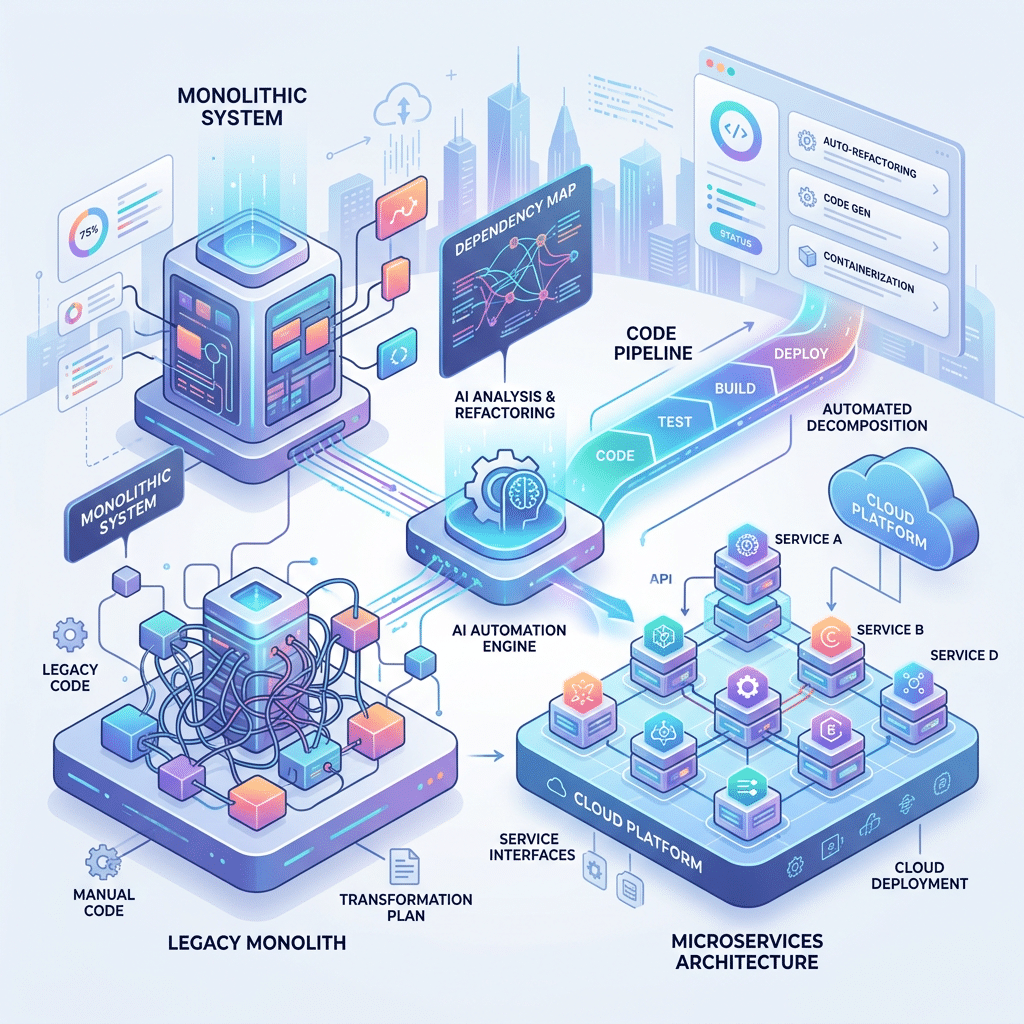
The technological evolution of AI-Augmented Code Refactoring has shifted from simple rule-based linters to sophisticated multi-agent workflows. In the 2026 landscape, AI-Augmented Code Refactoring operates by analyzing Abstract Syntax Trees (AST) and mapping cross-service dependency chains that span dozens of modules. Unlike traditional text-replacement tools, modern AI-Augmented Code Refactoring parses the underlying logic and structure of a codebase, understanding variable scope and maintaining consistency across imports and function calls.
This intelligence is powered by large-scale transformer models such as CodeBERT and CodeT5, which are specifically trained to identify “code smells”—symptoms of poor implementation that increase defect-proneness and maintenance costs. By utilizing AI-Augmented Code Refactoring, Vedhas Technology Solutions can perform semantic-level transformations that improve code quality by 68% to 79% while maintaining 99% syntactic correctness. The process begins with static analysis to identify hotspots—files where defects cluster due to high complexity—and then engages AI agents to suggest optimized, readable, and modular equivalents.
In 2026, the most effective implementations of AI-Augmented Code Refactoring involve coordinated teams of agents. These agents handle specific implementation workflows: one agent may focus on writing tests, another on generating documentation, and a third on the actual code transformation. This agentic approach allows for long-running tasks that work autonomously for days, building entire feature sets or modernization modules with minimal human intervention. For the CTO, this means that the traditional timeline for onboarding a new engineer to a legacy codebase collapses from weeks to hours, as the AI-Augmented Code Refactoring tool provides the contextual understanding necessary to navigate the complexity instantly.
Vedhas Technology Solutions: A Strategic Partner in Delivery Velocity
Vedhas Technology Solutions distinguishes itself in the modernization market by acting as a one-stop-shop for technology, business, and process transformation. Founded on the motto of “Enabling enterprises to compete better in the marketplace using IT as a strategic tool,” Vedhas leverages AI-Augmented Code Refactoring to bridge the gap between legacy limitations and modern performance. The firm’s approach is built on four core differentiators: deep market expertise, financial transparency, proactive project management, and comprehensive service integration.
| Vedhas Technology Solutions vs. Industry Standards | Vedhas Approach | Generalist Competitors |
| Modernization Method | AI-Augmented Code Refactoring | Manual rewrites/Lift-and-Shift |
| Delivery Speed Improvement | 30% – 50% Faster | Standard baseline velocity |
| Transparency | Upfront cost with no hidden fees | Unclear pricing/Scope creep |
| Industry Focus | FinTech, E-Commerce, EdTech | Generalist approach across all sectors |
| Support Model | 360° Monitoring & Weekly Calls | Sporadic, reactive updates |
A critical component of the Vedhas delivery model is the Infrastructure Readiness Assessment (IRA). This methodology ensures that before a single line of AI-Augmented Code Refactoring is executed, the client’s infrastructure—including hardware, network, and operational readiness—is systematically evaluated. By identifying gaps and incompatibilities in the assessment phase, Vedhas mitigates the risk of downtime and ensures that the modernized system integrates seamlessly with existing business processes.
Industry-Specific Impact: Modernizing FinTech, E-Commerce, and Beyond
The application of AI-Augmented Code Refactoring is particularly vital in highly regulated or transaction-heavy industries. Vedhas Technology Solutions has established deep expertise in FinTech, e-commerce, and educational institutions, where system availability and security are mission-critical.
FinTech: Accelerating Secure Financial Modernization

For fintech companies and financial service providers, platform speed, transaction reliability, and security are directly tied to customer trust and business growth. Legacy banking and payment systems often struggle with slow release cycles, security vulnerabilities, and rigid architectures that limit innovation. AI-Augmented Code Refactoring enables fintech organizations to modernize critical financial platforms without the risks associated with complete system rewrites.
Vedhas utilizes AI-Augmented Code Refactoring to transform outdated financial applications into scalable, cloud-native systems that support faster transactions, stronger security controls, and seamless API integrations. By incrementally modernizing legacy systems through microservices and automated dependency analysis, Vedhas helps fintech businesses reduce technical debt, improve compliance readiness, and accelerate feature delivery in an increasingly competitive digital finance ecosystem.
Education and EdTech: Scaling for Digital Transformation
The transition from traditional to online learning requires scalable, high-performance platforms. Educational institutions often struggle with integrating multiple tools and managing student engagement systems on legacy infrastructure. AI-Augmented Code Refactoring enables these organizations to modernize their Learning Management Systems (LMS) efficiently, ensuring that they can handle the increased load of digital delivery. Vedhas has successfully implemented such transformations, helping schools and course providers transition to online learning with student-centric engagement tools and optimized content management.
The.NET 10 Evolution: Performance and Cost Optimization through Native AOT
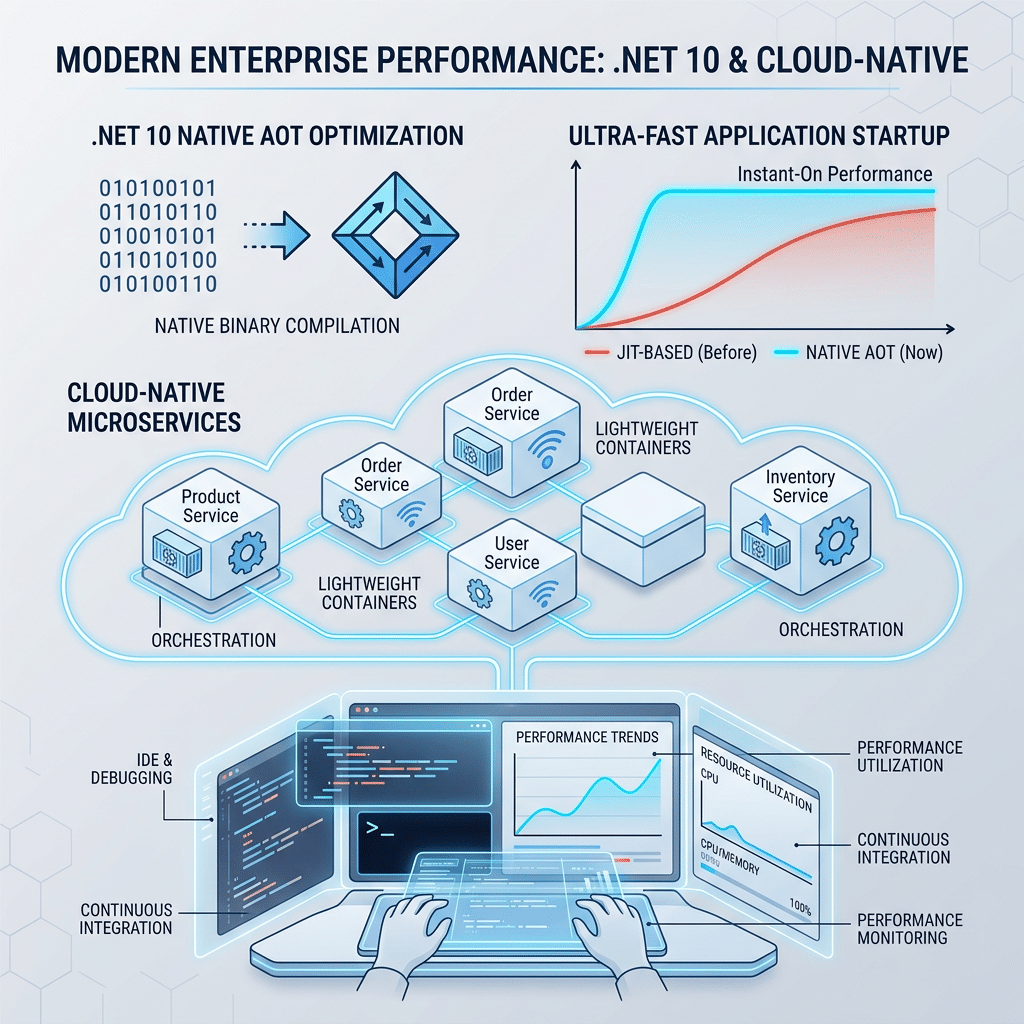
A cornerstone of modern AI-Augmented Code Refactoring is the transition to.NET 10, particularly the adoption of Native Ahead-of-Time (AOT) compilation. In 2026,.NET 10 has emerged as the strategic choice for enterprise modernization, transforming the runtime from a niche optimization into a production-ready infrastructure for microservices and cloud-native apps.
| .NET 10 Performance Metric | Traditional .NET | Native AOT (.NET 10) | Improvement |
| Startup Time | 800ms – 1s | <10ms – 50ms | 90% Reduction |
| Memory Footprint | 100% (Baseline) | 30% – 40% of baseline | 60% – 70% Savings |
| Binary/Container Size | Large (Full Runtime) | 30% – 60% Smaller | Significant Storage ROI |
| JSON Serialization Speed | 450 MB/s | 720 MB/s | 60% Increase |
| Throughput (Req/sec) | 8.2M | 11.5M | 40% Increase |
AI-Augmented Code Refactoring identifies areas of a legacy .NET application that rely on runtime reflection—which is incompatible with AOT—and refactors them to use source generators. This change enables the application to be compiled directly into platform-specific machine code at build time, eliminating the overhead of JIT (Just-In-Time) compilation.
The business impact of this transition is profound. Applications refactored for Native AOT start almost instantly, making them ideal for serverless environments where “cold start” times directly impact cloud bills. Organizations using AI-Augmented Code Refactoring to move to.NET 10 report a 30% reduction in response times and a 12% to 40% decrease in cloud hosting costs due to lower memory usage and improved scaling efficiency. Furthermore, the reduced binary size accelerates CI/CD pipelines and reduces network transfer costs, creating a high-ROI modernization path.
The Total Cost of Ownership (TCO) and ROI of AI-Augmented Code Refactoring
The decision to invest in AI-Augmented Code Refactoring must be justified through a rigorous analysis of Return on Investment. In the 2026 engineering market, a fully loaded software developer in the United States costs between $150,000 and $250,000 annually, or approximately $94 per hour. AI tooling, when fully integrated, costs roughly $2000 to $5000 per developer per month—representing just 1% to 3% of the total developer cost.
The break-even point for AI-Augmented Code Refactoring is remarkably low. If the tooling saves a developer more than 3.2 hours per month—less than one hour per week—the investment pays for itself. Since AI-Augmented Code Refactoring has been shown to save 5 to 15 hours per week by reducing context-gathering overhead and automating repetitive tasks, the ROI typically lands between 5x and 15x.
| ROI Dimension | Traditional Modernization | AI-Augmented Code Refactoring |
| Time-to-Value | 18+ Months (Big Bang) | 2–4 Months (Phased) |
| Developer Efficiency | Baseline (Negative due to debt) | 30% – 60% Improvement |
| Maintenance vs. Innovation | 72% Maintenance | Shift toward 50%+ Innovation |
| Code Review Speed | Baseline | 91% Faster review cycles |
| Recruiting & Retention Cost | High (Legacy Tech Stagnation) | Lower (Modern AI Workflows) |
Furthermore, AI-Augmented Code Refactoring serves as a “force multiplier” for well-structured teams. While it accelerates initial code drafting, it also allows senior engineers to focus on high-stakes strategic decisions and agent coordination, rather than being bogged down in routine verification tasks. This shift in roles is essential for maintaining sprint velocity in an environment where the complexity of software systems continues to grow exponentially.

Strategic Implementation: How Vedhas Delivers the 30% Speed Advantage
The claim that Vedhas Technology Solutions speeds up delivery by 30% is not based on mere tool adoption, but on a systematic delivery model that integrates AI-Augmented Code Refactoring into every phase of the project.
Phase 1: Discovery and Strategy (Weeks 1-2)
The modernization journey begins with a “Structured Discovery” process. Vedhas maps out the complete picture of the current technology landscape, business objectives, and budget constraints. During this phase, the Infrastructure Readiness Assessment (IRA) is conducted to identify technical specification gaps and ensure there are no surprises during the transition. This upfront planning ensures that the project roadmap is aligned with the company’s growth goals from day one.
Phase 2: Design and Iterative Development
Using AI-Augmented Code Refactoring, Vedhas executes an iterative development approach. Weekly progress calls and regular demos keep the client informed and involved. AI agents are deployed to handle repetitive coding tasks—such as mapping DTOs, controllers, and database layers—while human engineers focus on the complex business logic and architectural integrity. This division of labor is what enables the 30% to 50% increase in feature delivery speed.
Phase 3: Automated Validation and QA
To ensure zero-defect delivery, Vedhas utilizes AI-enhanced QA services. AI agents automatically generate unit and integration tests, ensuring that every refactored module preserves original behavior while improving performance. This automated validation reduces the manual effort of testing and allows for faster release cycles with 40% fewer failures compared to non-modernized systems.
Phase 4: Post-Deployment and Continuous Optimization
Modernization is not a one-time event. Vedhas provides ongoing support and 360° monitoring to identify and resolve issues before they impact the business. By continuously measuring the efficiency and impact of the modernized system, Vedhas helps organizations identify further opportunities for AI-Augmented Code Refactoring, ensuring that the software remains an agile, competitive asset rather than a digital anchor.
Still Spending More Time Maintaining Than Innovating?
Discover how Vedhas helps enterprises modernize legacy systems, reduce infrastructure costs, and accelerate software delivery using AI-Augmented Code Refactoring.
The Talent Scarcity Crisis and the Cultural Value of Modernization
A critical pain point for 2026 CTOs is the shortage of skilled professionals who can work on emerging technologies. Talent shortages affect 63% of organizations, and the competition for senior developers is fiercer than ever. Modern engineering talent gravitates toward cloud-native stacks and AI-assisted workflows. Companies that persist with two-decade-old codebases face an operational risk where their existing staff becomes a shrinking, increasingly expensive pool of specialized contractors.
AI-Augmented Code Refactoring serves as a powerful talent recruitment and retention tool. By modernizing the tech stack and providing developers with modern AI tools, organizations signal that they are committed to innovation. This reduces turnover—which can cost 50% to 200% of a developer’s annual salary to replace—and creates a culture of excellence where experimentation and learning are encouraged. Vedhas Technology Solutions addresses this by providing “Staff Augmentation” and “On-Demand Talent,” allowing businesses to access specialized skills without the burden of long-term recruitment.
The Autonomous SDLC and Beyond
Looking toward 2030, the role of AI in software engineering will continue to expand toward a fully autonomous Software Development Lifecycle (SDLC). We are moving from AI “Copilots” to autonomous agents that can handle SRE (Site Reliability Engineering) and incident response with minimal human oversight. In this future environment, organizations that have already executed AI-Augmented Code Refactoring to modernize their foundations will be the ones capable of adopting these autonomous agents to further enrich their operations.
The current period of “AI disillusionment” will likely pass as organizations realize that success is not about cost reduction alone, but about spending more efficiently in pursuit of measurable business outcomes. AI-Augmented Code Refactoring is the foundational work that enables this future. It allows organizations to build “evolutionary systems” that have the flexibility to change and adopt new technology as it emerges.
Turning Technology into a Business Advantage
For the innovative CTO, AI-Augmented Code Refactoring is the ultimate tool for overcoming the “Legacy Debt Crisis.” By partnering with an expert like Vedhas Technology Solutions, enterprises can systematically untangle the complexities of their aging systems, achieve a 30% increase in delivery speed, and reduce the long-term cost of maintenance.
The transition to .NET 10, and the adoption of agentic AI workflows are not isolated technical tasks—they are strategic priorities that define the modern intelligent enterprise. With a dual US and India presence, transparent pricing, and a proven track record across fintech, e-commerce, and education, Vedhas Technology Solutions provides the skills, speed, and strategic thinking necessary to turn technology from a burden into a competitive advantage. The path forward is clear: modernize with AI-Augmented Code Refactoring now, or be left behind as the digital divide continues to widen.