A silent operational hazard lies buried within many enterprise web architectures, working underneath otherwise functional customer-facing interfaces. While an application may appear stable, secure, and reliable to the end-user, the underlying runtime may be approaching or already past its official support window.
For organizations running EOL PHP Applications, this surface-level stability is often a dangerous illusion. Operating on outdated runtimes introduces a complex array of security vulnerabilities, compliance liabilities, and escalating infrastructure expenses. In the fast-moving business ecosystem of 2026, technology decisions can no longer be deferred without high-stakes consequences.
Many organizations continue running EOL PHP Applications without realizing the long-term operational consequences. Upgrading unsupported systems is not merely a task for the engineering queue; it is a critical strategic imperative that directly influences corporate liability, operational cost, and brand reputation.
Executive Summary for Decision-Makers
To help corporate decision-makers quickly grasp the critical risks associated with EOL PHP Applications, the table below outlines the business reality of operating unsupported systems compared to modernized environments:
| Operational Dimension | Legacy / EOL PHP Profile | Modern PHP 8.x Profile (8.3–8.5) | Business Impact |
|---|---|---|---|
| Security Patches | Zero official upstream security updates or vulnerability backports. | Active bug fixes and regular critical security patches. | Eliminates exposure to automated exploits and zero-day attacks. |
| Regulatory Compliance | Fails PCI DSS 4.0.1, SOC 2, HIPAA, and GDPR audit requirements. | Fully compliant with vendor support mandates. | Prevents compliance fines, transaction processing bans, and audit failures. |
| Performance & Speed | High request latency, high CPU usage, and slow database queries. | JIT compilation, OPcache preloading, and Fiber-based concurrency. | Accelerates page load speeds by 20% to 40%, boosting customer retention. |
| Infrastructure Spending | Bloated memory footprints require massive server allocations. | 27.5% reduction in peak memory; 38% higher server density. | Lowers cloud infrastructure spend by running more concurrent workers. |
| Hiring & Talent | High developer burnout; massive friction recruiting modern engineers. | Appeals to top talent; aligns with modern frameworks (Laravel, Symfony). | Reduces engineering turn-around times and lowers recruitment costs. |
Operating EOL PHP Applications creates a significant operational divergence. While legacy codebases require continuous manual intervention to patch vulnerabilities and maintain slow dependencies, modernizing to supported releases secures systems automatically while streamlining operational overhead. The financial and strategic arguments for modernization go far beyond simple security maintenance; they represent a fundamental optimization of the company’s technical capital.
Understanding the PHP Lifecycle Behind EOL PHP Applications
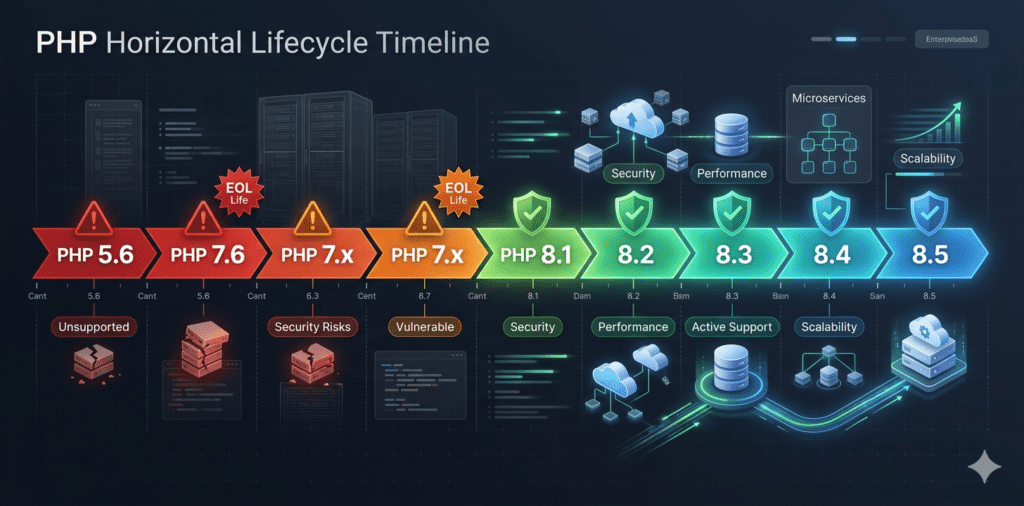
To manage technical debt effectively, business leaders must understand the official timeline governing the PHP ecosystem. The PHP Release Cycle was modified in March 2024 to extend the lifespan of each release branch to four years. This structured timeline consists of two distinct phases: two years of active support, where the core team fixes all reported bugs and security vulnerabilities, followed by two years of security-only support, where only critical security patches are backported on an as-needed basis. Once these four years conclude, the version reaches its official PHP end of life and is abandoned upstream. Without proactive modernization, EOL PHP Applications gradually evolve into major security and compliance liabilities.
The table below outlines the official PHP support calendar as of May 2026, based on the Official PHP Supported Versions Calendar, mapping out which releases are safe for enterprise operations and which present extreme business risk :
| PHP Version | Release Date | Active Bug Fixes Ended | Security Support EOL Date | Current Status | Recommended Action |
|---|---|---|---|---|---|
| PHP 8.5 | November 20, 2025 | December 31, 2027 | December 31, 2029 | Supported (Active) | Maintain current environment |
| PHP 8.4 | November 21, 2024 | December 31, 2026 | December 31, 2028 | Supported (Active) | Plan next upgrade cycle |
| PHP 8.3 | November 23, 2023 | December 31, 2025 | December 31, 2027 | Supported (Security Only) | Schedule upgrade to 8.4 or 8.5 |
| PHP 8.2 | December 8, 2022 | December 31, 2024 | December 31, 2026 | Supported (Security Only) | Upgrade immediately (under 8 months left) |
| PHP 8.1 | November 25, 2021 | November 25, 2023 | December 31, 2025 | End of Life (EOL) | Migrate to 8.3+ or secure temporary support |
| PHP 8.0 | November 26, 2020 | November 26, 2022 | November 26, 2023 | End of Life (EOL) | Immediate migration required |
| PHP 7.4 | November 28, 2019 | November 28, 2021 | November 28, 2022 | End of Life (EOL) | Critical migration required |
| PHP 5.6 and older | August 28, 2014 | December 31, 2016 | December 31, 2018 | End of Life (EOL) | Extreme hazard; immediate refactoring needed |
For organizations maintaining EOL PHP Applications, this timeline creates immediate operational urgency. Furthermore, PHP 8.2 will reach its EOL on December 31, 2026, giving organizations using it less than nine months to complete their migrations. Running unsupported PHP versions forces companies to assume full responsibility for debugging core runtime bugs and managing security threats.
This timeline clearly demonstrates why EOL PHP Applications create escalating operational risk every year they remain unmodernized.
Crucial Business Risks of Outdated PHP Versions
Running EOL PHP Applications places an organization in a highly vulnerable position. These risks are not purely technical; they have direct, measurable impacts on financial stability, compliance status, and operational efficiency.
Security Threats Facing EOL PHP Applications
When an application operates on an EOL runtime, it is exposed to risks of outdated PHP versions that scale exponentially over time. Because security vulnerabilities in EOL PHP versions are thoroughly documented in public databases like the Common Vulnerabilities and Exposures (CVE) index, malicious actors do not need to target a specific company with custom attacks. Instead, automated botnets continuously scan global IP blocks looking for signature headers of outdated software. Because vulnerabilities remain permanently exposed, EOL PHP Applications become easy targets for automated exploitation. Once identified, these systems are exploited via widely available pre-written scripts.
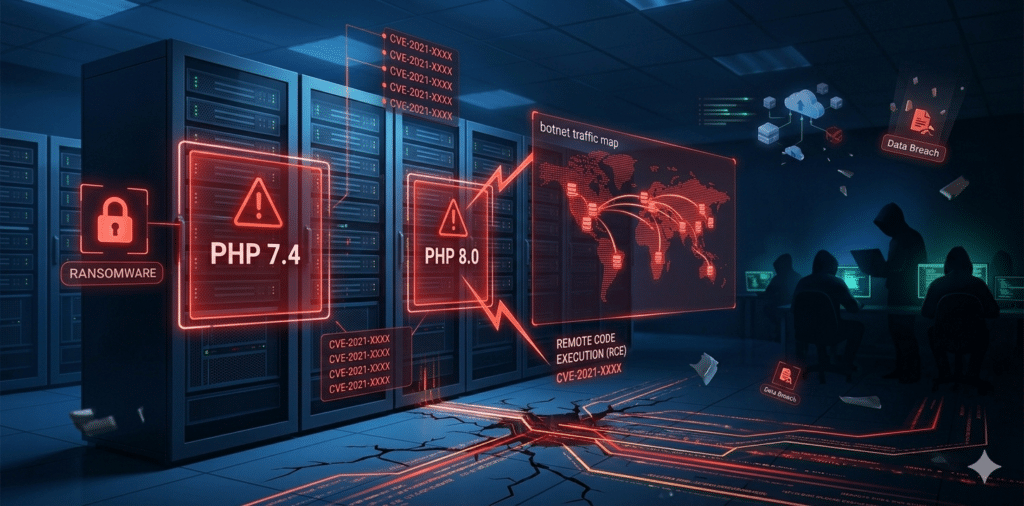
During 2025 alone, the PHP development ecosystem suffered 12 new vulnerability disclosures, carrying a significant average severity score of 5.3. Legacy systems running EOL versions fail to receive upstream patches for major flaws such as CVE-2025-14177 and CVE-2025-14180, creating permanent backdoors. The primary PHP security vulnerabilities targeted by attackers include:
- Local File Inclusion (LFI): Attackers manipulate file-loading parameters to read restricted server configurations, expose database credentials, and access operating system files.
- Session Token Eavesdropping and Theft: Outdated cryptographic libraries and unpatched session-handling logic allow hackers to intercept session tokens, impersonating authenticated users and gaining admin access.
- Remote Code Execution (RCE) and Full Server Takeover: Highly critical vulnerabilities allow attackers to inject web shells into the server environment. This gives them absolute administrative control to deploy ransomware, exfiltrate private client databases, or hijack the infrastructure to launch attacks on other systems.
The business impact of these PHP security risks is catastrophic. IBM reports that the average cost of a data breach reached $4.88 million, driven by digital forensics, legal defense, customer notification, and regulatory fines.
Regulatory Failures and PHP Compliance Risks

Beyond immediate technical threats, running unsupported software is one of the most severe business risks of outdated software from a regulatory standpoint. For businesses operating EOL PHP Applications, regulatory exposure is now unavoidable. Global compliance frameworks do not merely recommend modern software; they mandate active vendor support. As a result, EOL PHP Applications are increasingly viewed by auditors as unacceptable production infrastructure.
A critical milestone occurred with the full enforcement of PCI DSS 4.0.1, as documented by the PCI Security Standards Council Document Library. Specifically, Control 12.3.4 transforms lifecycle management from a vague recommendation into an explicit compliance directive. This control requires organizations to check at least annually whether they are running any end-of-life software and put together a structured, documented upgrade plan. Running EOL PHP applications violates this standard, which directly triggers a failure of PCI DSS assessments under Requirement 6 (which governs secure systems and patching timelines).
The consequences of failing a PCI DSS assessment are devastating:
- Immediate suspension of credit card processing capabilities.
- Steep monthly non-compliance fines levied by acquiring banks.
- Extreme liability shift to the merchant in the event of a cardholder data breach.
Similarly, frameworks like SOC 2, HIPAA for healthcare systems, and GDPR for consumer data protection strictly prohibit the deployment of unpatched runtimes. Compliance automation engines and external IT auditors continuously flag PHP compliance risks. This creates massive friction in B2B sales cycles, as enterprise vendor security questionnaires will immediately reject any vendor utilizing unsupported infrastructure, stalling business growth.
How EOL PHP Applications Increase Maintenance and Cloud Costs
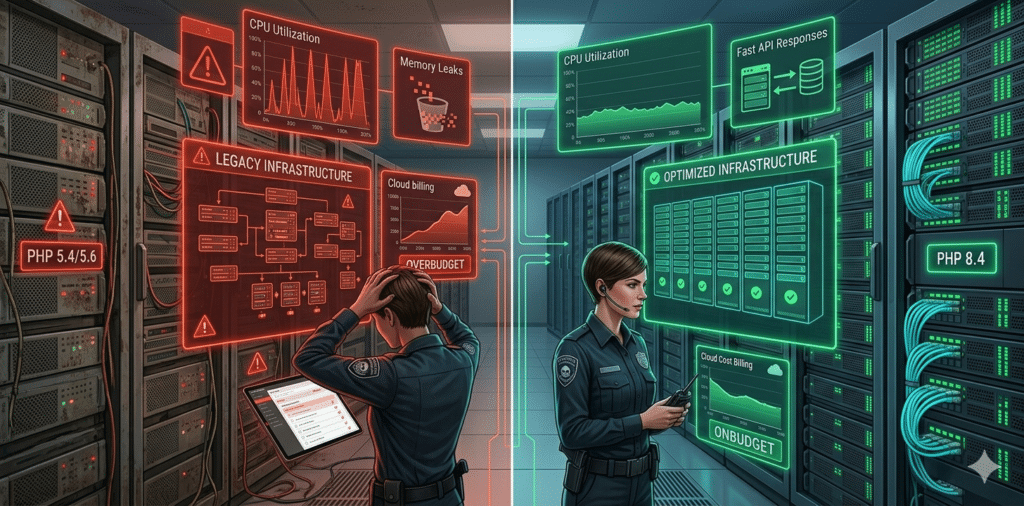
Some operational leaders argue that a legacy system that “works fine” should not be altered, operating under the assumption that they are saving money by avoiding upgrade costs. This reasoning is financially flawed. Keeping legacy PHP applications online dramatically increases ongoing PHP maintenance costs and PHP infrastructure costs. Over time, EOL PHP Applications generate hidden cloud expenses through inefficient CPU and memory utilization.
Modern PHP is highly optimized, introducing engine modifications such as the Just-In-Time (JIT) compiler, improved garbage collection, and an optimized inheritance cache. Upgrading from PHP 7.4 to PHP 8.3+ yields a massive reduction in latency and a dramatic increase in server throughput.
The efficiency gains are detailed in the following benchmark data, reflecting performance under concurrent loads:
| Performance Metric | Legacy PHP 7.4 Baseline | Modern PHP 8.3/8.4 | Engine Mechanism | Financial & Operational Impact |
| Symfony Throughput | 1,210 requests/sec | 1,798 requests/sec | JIT Compiler & Inheritance Cache | +48.6% throughput; fewer server instances required. |
| WordPress Throughput | 892 requests/sec | 1,147 requests/sec | OPcache optimization & JIT Tracing | Faster user experience, improved search engine rankings. |
| Peak Memory Usage | 14.2 MB per worker | 10.3 MB per worker | Elimination of dynamic properties & GC tuning | 27.5% memory reduction, permitting higher server density. |
| Server Density Limit | 50 concurrent workers | 69 concurrent workers | Low-overhead memory allocations | 38% increase in concurrency within the same RAM allocation. |
| Cold-Start Latency | ~45 milliseconds | ~18 milliseconds | OPcache Preloading (opcache.preload) | Minimizes first-request delays and resource spikes. |
| I/O-Bound Efficiency | Worker blocked during wait | Fibers multi-tasking (310 req/s vs 42) | Non-blocking concurrency primitives | Drastically lowers instance scaling requirements during traffic peaks. |
As indicated by these benchmarks, running an EOL runtime like PHP 7.4 forces a server to spend roughly 27.5% more memory per request, resulting in severely restricted server density. A server that could easily handle 69 concurrent requests under PHP 8.3 is choked at 50 requests under PHP 7.4. To offset this performance degradation, organizations must over-provision cloud hosting instances, directly inflating cloud bills month after month.
Furthermore, the New Relic 2024 State of Observability Report states that one hour of downtime costs an average of $300,000. Legacy applications are plagued by PHP scalability issues and memory leaks that trigger sudden production outages during peak business hours. Because upstream bug support has ceased, the engineering team must spend valuable development hours creating custom, brittle code workarounds to keep outdated dependencies functioning. This drives up PHP technical debt, diverting engineering focus away from revenue-generating feature development.
The Human Capital Crisis: Developer Attrition and Talent Acquisition
The negative impact of maintaining EOL PHP applications is not confined to servers and code; it deeply affects human resources. The global developer market is highly resistant to working on outdated tech stacks. Software engineers understand that their long-term employability relies on staying current with modern frameworks (such as Laravel 11/12 and Symfony 7) and newer runtime features. Consequently, many developers actively avoid working on EOL PHP Applications.
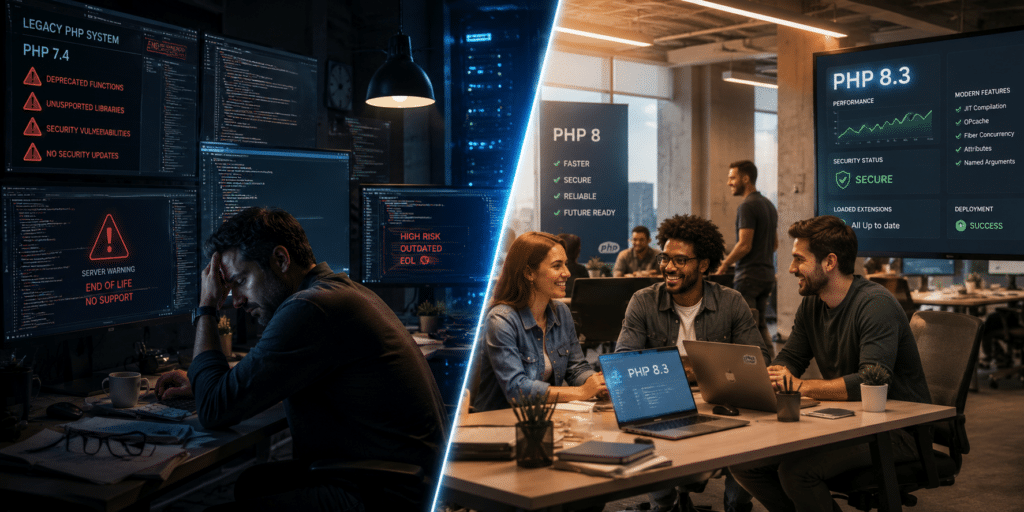
Consequently, organizations insisting on maintaining obsolete PHP stacks face severe talent challenges:
- High Engineering Attrition: Senior developers forced to debug unmaintained, poorly documented, decade-old codebases quickly experience burnout and seek employment elsewhere, taking critical system knowledge with them. Replacing a lost engineer typically costs between 50% and 200% of their annual salary.
- Extremely Restricted Candidate Pools: Recruitment campaigns for legacy PHP stacks yield few qualified applicants, forcing companies to lower their standards or pay steep premiums.
- Inflated Staffing Budgets: Mid-level PHP developers in the United States command hourly rates of $50 to $80 ($8,000 to $12,800 monthly), while senior engineers require $80 to $150+ per hour ($12,800 to $24,000+ monthly). Paying these high salaries for developers who spend their days fighting technical debt rather than shipping new products is a highly inefficient use of capital.
Ultimately, the difficulty of hiring talent to maintain legacy PHP systems slows down the product lifecycle, rendering the business highly uncompetitive.
The PHP Modernization Roadmap: Strategic Solutions
When faced with the realities of EOL PHP applications, decision-makers generally have three strategic pathways, each carrying vastly different operational and financial profiles :
- Active Upgrading to Supported Versions: The most strategic and cost-effective approach long-term. Moving to PHP 8.3, 8.4, or 8.5 immediately mitigates security liabilities, restores regulatory compliance, and realizes massive performance and infrastructure cost-savings. While it requires upfront testing and coordination, it resolves technical debt systematically.
- Paying for Extended Security Support: If an immediate migration is impossible due to massive legacy code complexity, utilizing paid third-party extended lifecycle support (such as TuxCare) provides a viable temporary cushion. These providers backport security patches directly into the outdated runtime, maintaining compliance and safety while the migration is planned. This should be viewed purely as a temporary mitigation, not a permanent solution.
- Ignoring the Risk and Maintaining the Status Quo: This approach relies on a dangerous “if it isn’t broken, don’t touch it” mentality. This option fails the moment the system faces a regulatory audit, security assessment, or automated attack, exposing the business to devastating financial penalties and reputational ruin.
How to Modernize EOL PHP Applications Using Rector
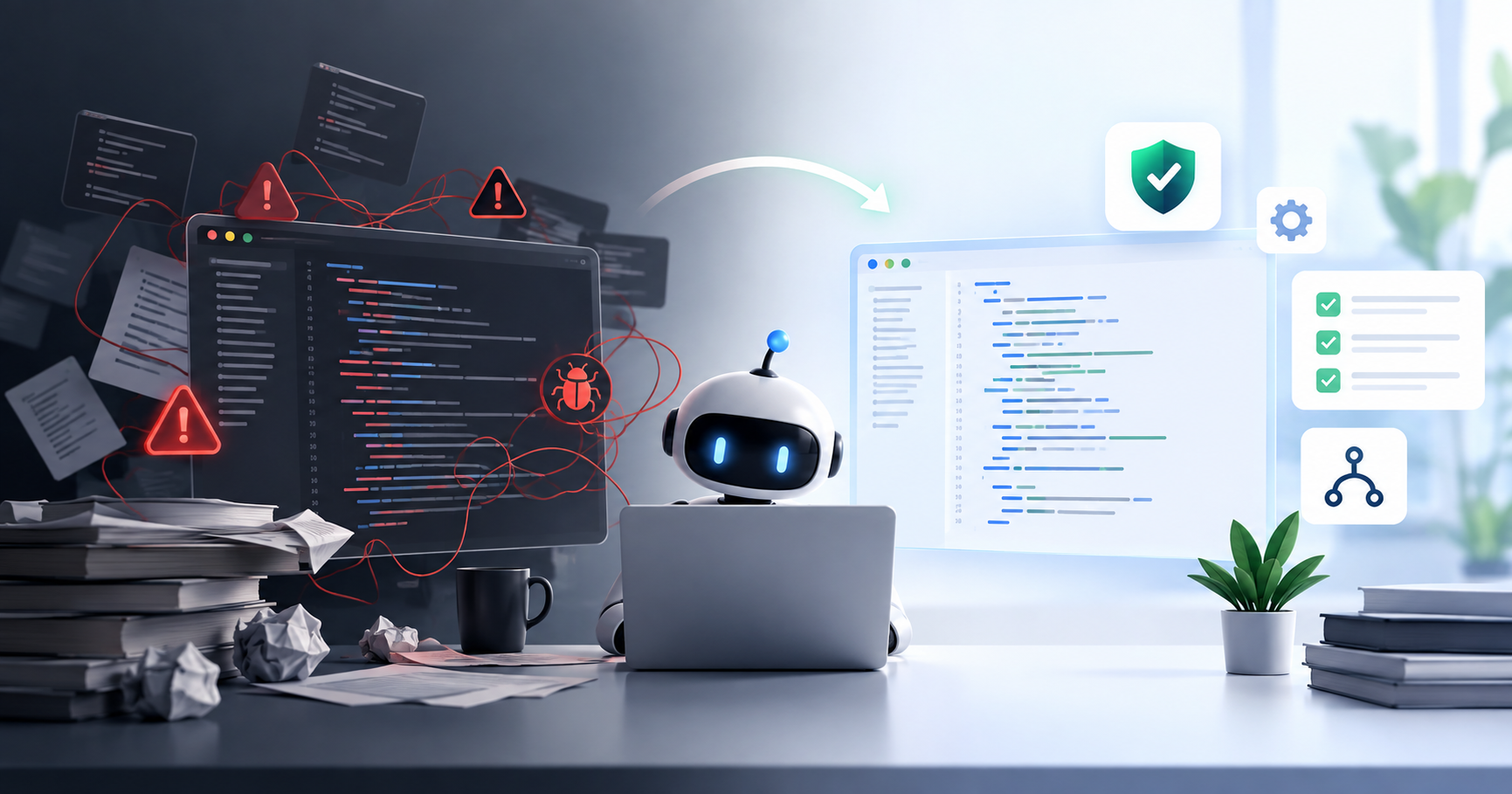
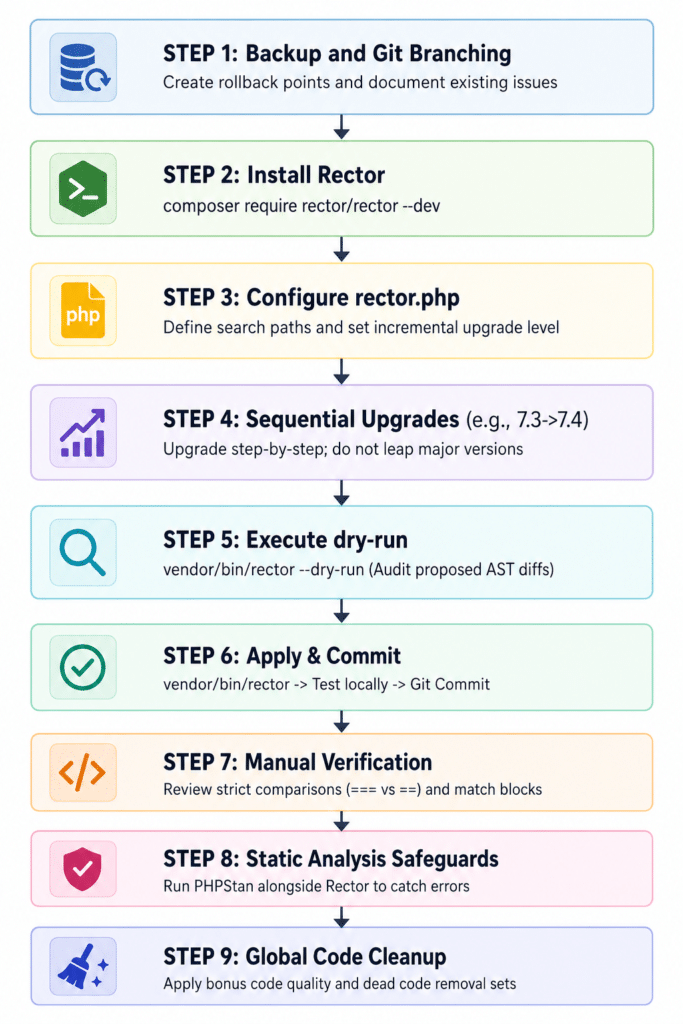
To execute a safe, predictable transition from legacy versions to modern, supported runtimes, engineering teams should abandon manual search-and-replace methodologies, which are slow and highly prone to introducing errors. Instead, modern software engineering utilizes automated code refactoring tools to implement a structured PHP upgrade strategy. These automation frameworks significantly reduce the risk associated with upgrading EOL PHP Applications.
The leading tool for this task is Rector, an open-source static analysis engine that parses PHP code into an Abstract Syntax Tree (AST). Think of an AST as a detailed, hierarchical map of the code’s structural meaning—much like a grammatical diagram of a sentence—allowing tools to rewrite the code safely without changing how the software actually behaves. Rector applies precise, isolated refactoring rules to safely convert legacy structures into modern PHP syntax without altering functional behaviors.
The following workflow is specifically designed for safely upgrading EOL PHP Applications to modern supported runtimes:
Common Strategic Mistakes in Legacy PHP Management
Organizations managing EOL PHP Applications often make several costly strategic mistakes:
- Delaying Upgrades Indefinitely: Treating runtime updates as non-urgent IT maintenance tasks until a security breach or compliance audit failure occurs.
- Attempting Premature Code Rebuilds: Deciding to rewrite an entire legacy system in a different language (such as Python or Go) from scratch. These projects are notoriously complex, expensive, and prone to failure; many run out of funding mid-way, resulting in wasted capital and zero progress. Upgrading the existing PHP codebase is almost always faster, safer, and highly cost-effective.
- Ignoring Framework and Plugin Dependencies: Upgrading the PHP runtime without validating that underlying CMS frameworks (such as WordPress or Joomla) and third-party plugins are compatible, leading to unexpected production crashes.
- Underestimating PHP Technical Debt: Allowing custom legacy workarounds and frozen library dependencies to accumulate for years, which dramatically increases the complexity of future upgrades.
The Future Outlook: AI Readiness and Cloud Scalability
Businesses still operating EOL PHP Applications risk falling behind modern AI-ready infrastructure standards. Moving forward, modern PHP versions (8.3, 8.4, and 8.5) are highly optimized for cloud-native architectures, API-first integrations, and AI-driven automation. Upgrading runtimes is not just a defensive measure against security threats; it is an offensive strategy that prepares the enterprise codebase for AI-augmented development, real-time data processing, and highly scalable cloud modernization.
Partnering for Success: Vedhas Technology
Managing the complexities of EOL PHP applications requires deep architectural expertise, structured migration execution, and continuous quality assurance. For U.S. businesses looking to turn technology from a burden into a competitive advantage, Vedhas Technology Solutions serves as a premier, Seattle-area IT consulting partner.
Operating out of Bothell, Washington, Vedhas Technology has spent over a decade delivering high-performance, secure software engineering and cloud infrastructure services to startups, growing mid-sized firms, and enterprises across the United States. Our engineering teams specialize in modernizing EOL PHP Applications for security, compliance, scalability, and long-term operational stability. The certified engineering squads at Vedhas Technology utilize AI-augmented refactoring methodologies to accelerate delivery timelines by 30%, systematically dismantling legacy PHP technical debt while maintaining absolute security and compliance.
Decision-makers seeking to secure their applications and optimize operational costs are invited to
with Vedhas Technology to assess their current architecture and map out a clear, cost-effective modernization roadmap.
Why Modernizing EOL PHP Applications Can No Longer Be Delayed
Running EOL PHP Applications represents a substantial, unmitigated hazard to corporate security, operational continuity, and brand capital. While deferring runtime modernization may offer a brief illusion of cost savings, the reality is a compounding balance of technical debt, increased cloud hosting expenses, compliance risks, and talent friction.
Organizations that continue delaying modernization of EOL PHP Applications expose themselves to avoidable operational and financial risk. By adopting a structured PHP modernization roadmap powered by AST-based automation tools like Rector, technical and non-technical business leaders can transition their legacy applications into high-performance, future-ready business assets. The optimal time to defuse this technology liability is before security or audit failures force an emergency response. Partnering with established development experts ensures a smooth, seamless transition that preserves capital and prepares the codebase for next-generation growth.