E-Commerce App decisions are becoming increasingly important for growing retail and direct-to-consumer (DTC) brands. While a dedicated mobile app can improve customer retention, repeat purchases, loyalty, and personalized engagement, it is not automatically the right investment for every e-commerce business.
Before building an iOS or Android shopping app, businesses should evaluate purchase frequency, mobile traffic, customer lifetime value, push notification opportunities, technical requirements, and ongoing maintenance costs. This decision framework helps you determine whether an e-commerce app can create meaningful business value or whether a responsive website or PWA is the more practical approach.
Key Takeaways
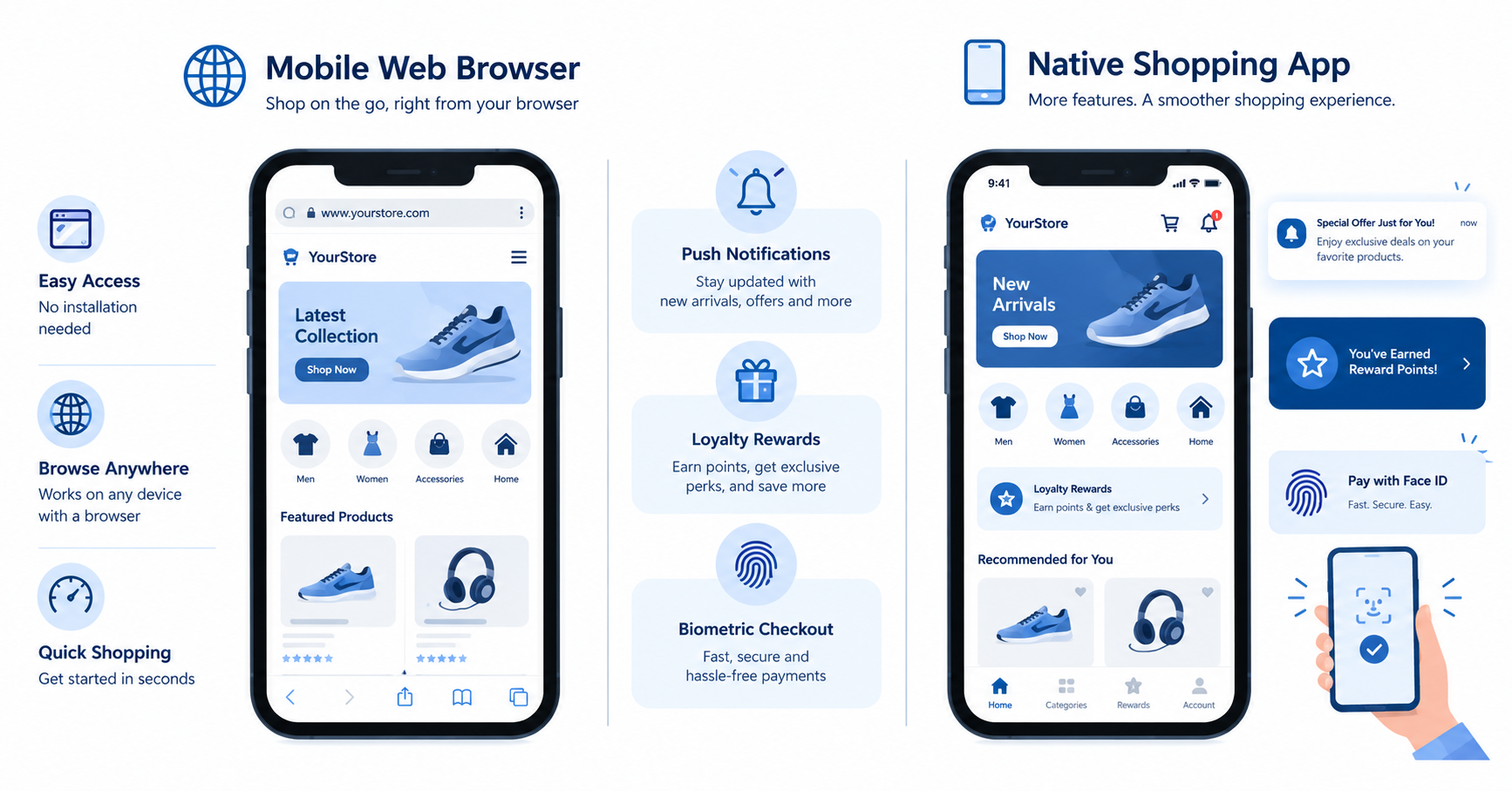
- The Acquisition vs. Retention Divide: Mobile websites are built for customer acquisition (SEO, paid search, social ads, top-of-funnel discovery). Native mobile apps are built for customer retention and lifetime value (LTV) (high-frequency reorders, VIP loyalty programs, zero-cost push notifications).
- The Core Economic Rule: Building a native app solely for “more sales” is a flawed strategy. If your average customer purchases from your brand fewer than 3–4 times per year, the app installation friction will suppress conversions compared to a well-optimized responsive mobile web store..
-
The 5 Feasibility Decision Pillars:
- The Modern Technology Strategy: Cross-platform frameworks like Flutter and React Native enable brands to deploy iOS and Android apps from a single unified codebase, cutting initial development and maintenance costs by up to 40%.
1.Purchase Frequency: Is your product consumable, replenishment-based, or high-velocity fashion?
2.Push Notification Value: Do you have time-sensitive drops, flash sales, or personalized restock alerts?
3.Hardware Utilization: Does your shopping experience require camera AR, barcode scanning, GPS, or offline mode?
4.Customer Lifetime Value (LTV): Can the app’s retention lift justify the $25k–$75k+ build and app store maintenance overhead?
5.Team Bandwidth: Can your team support ongoing iOS/Android OS updates, app store optimization (ASO), and release cycles?
In the boardrooms of growing retail and direct-to-consumer (DTC) brands, few questions spark more debate than “Should we build our own mobile app?” Founders look at industry giants like Nike, ASOS, and Sephora and assume that launching an iOS and Android app is the natural next step. However, building an app is not an automatic growth lever. Understanding whether you need an ecommerce app requires a rigorous evaluation of your customer purchase velocity, acquisition costs, and technical infrastructure.
At a Glance: The E-Commerce App Feasibility Scorecard
Before committing development capital to an E-Commerce App, evaluate your store against this 5-pillar feasibility scoring matrix. Score your business on each dimension (1 to 5 points) to identify if your brand is ready for a dedicated app:
| Feasibility Dimension | Low Need (Score: 1–2) | Moderate Need (Score: 3) | High Need (Score: 4–5) | Your Assessment |
|---|---|---|---|---|
| 1. Annual Purchase Frequency | 1–2 orders / year (Mattresses, High-end Furniture, Major Electronics) | 3–5 orders/year (seasonal apparel, footwear) | 6–24+ orders/year (Grocery, Supplements, Beauty, Pet Care, Coffee) | [ 1 – 5 ] |
| 2. Mobile Traffic Share | Mobile traffic < 50% of total visits. | Mobile traffic: 50% – 70% | Mobile traffic > 70% of total visits | [ 1 – 5 ] |
| 3. Push Notification Utility | Low utility (Evergreen catalogue with no time-sensitive drops) | Moderate (monthly sales, generic promo blasts) | High (flash drops, daily deals, real-time restock & price drop alerts) | [ 1 – 5 ] |
| 4. Device Hardware Requirements | Standard catalogue browsing (images & text only) | Basic camera use (photo review uploads) | Deep hardware integration (AR room preview, barcode scanning, offline mode) | [ 1 – 5 ] |
| 5. Annual Brand Revenue (GMV) | Under $1,500,000 GMV | $1.5M – $5,000,000 GMV | $5,000,000+ GMV | [ 1 – 5 ] |
TOTAL SCORE INTERPRETATION :
5 – 12 Points: STICK TO RESPONSIVE WEB / PWA (An app will have negative ROI)
13 – 18 Points: APP IS OPTIONAL / HYBRID CANDIDATE (Evaluate Progressive Web App or MVP)
19 – 25 Points: BUILD DEDICATED MOBILE APP (Significant LTV and retention upside)
Web vs. Mobile App: The Strategic & Technical Divergence
Understanding whether to build an E-Commerce App requires acknowledging… the fundamental differences in user intent, channel economics, and technical capabilities:

1. The Friction Equation: Click vs. Download
- Mobile Web: Zero download barrier. A user clicks an Instagram ad or Google search result and lands directly on your product page within 800 ms. However, their session is temporary, vulnerable to tab closure, and dependent on browser cookie tracking.
- Mobile App: High download barrier. A user must navigate to the App Store or Google Play, authenticate, wait for the download (30MB–100MB), and open the app. However, once installed, your brand secures permanent real estate on their home screen.
2. Conversion Rates & Session Engagement
When evaluating an E-Commerce App, conversion performance should be compared with the existing mobile web experience rather than viewed in isolation.
- Mobile Web Average Conversion Rate: 1.8% – 2.4%
- Native Mobile App Average Conversion Rate: 4.5% – 6.2% (nearly 3x higher)
- Average Order Value (AOV): Mobile apps average 15%–20% higher AOV due to frictionless 1-tap Apple Pay/Google Pay checkout and sticky saved cart states.
The 5 Clear Signals: When Your Brand Genuinely Needs an App
If your business aligns with the following 5 operational signals, investing in dedicated mobile application development services will deliver transformative returns.

1. Your Business Model Relies on High-Velocity Repeat Purchases
If you sell consumable or subscription-adjacent products—such as speciality roaster coffee, fitness supplements, skincare regimens, infant care supplies, or fast-fashion drops—customers reorder monthly or bi-weekly. An app allows them to open the app, tap “Reorder Last Bundle”, authenticate with Face ID, and complete the order in under 5 seconds without re-entering credit cards or shipping addresses.
2. Paid Email & SMS Marketing ROI Is Degrading (Push Notification Economics)
Email open rates continue to decline due to aggressive spam filters and Gmail promotions tab sorting, while SMS marketing costs have surged (costing $0.015–$0.04 per message). Mobile push notifications are 100% free to send, achieve open rates 3x to 5x higher than email, and deliver immediate engagement for time-sensitive flash sales and inventory drops.
SMS MARKETING (100k Users):
100,000 recipients × $0.02 / SMS = $2,000 PER CAMPAIGN
NATIVE PUSH NOTIFICATIONS (100k Users):
100,000 Push Notifications via Firebase Cloud Messaging = $0.00 (ZERO MARGIN COST)
3. You Require Native Device Hardware Features (AR, Camera, Geofencing)
Modern commerce increasingly relies on smartphone hardware that mobile browsers cannot fully leverage:
- Augmented Reality (ARKit / ARCore): Allowing shoppers to preview how luxury furniture or lighting looks inside their living room before buying.
- Barcode & QR Scanning: Enabling B2B trade customers or retail shoppers to scan physical warehouse bins or retail tags to reorder instantly.
- Geofencing & Localised Beaconing: Triggering exclusive localised discount notifications when a loyalty member walks near your physical flagship store.
4. You Have a Deeply Engaged VIP Loyalty or Subscription Programme
For brands with passionate brand advocates (such as luxury apparel, gaming gear, or lifestyle wellness), an app acts as a private VIP club. You can gate exclusive product drops, offer in-app reward points multipliers, and build community discussion feeds that turn casual buyers into lifelong brand evangelists.
5. You Operate an Omnichannel Retail or B2B Trade Network
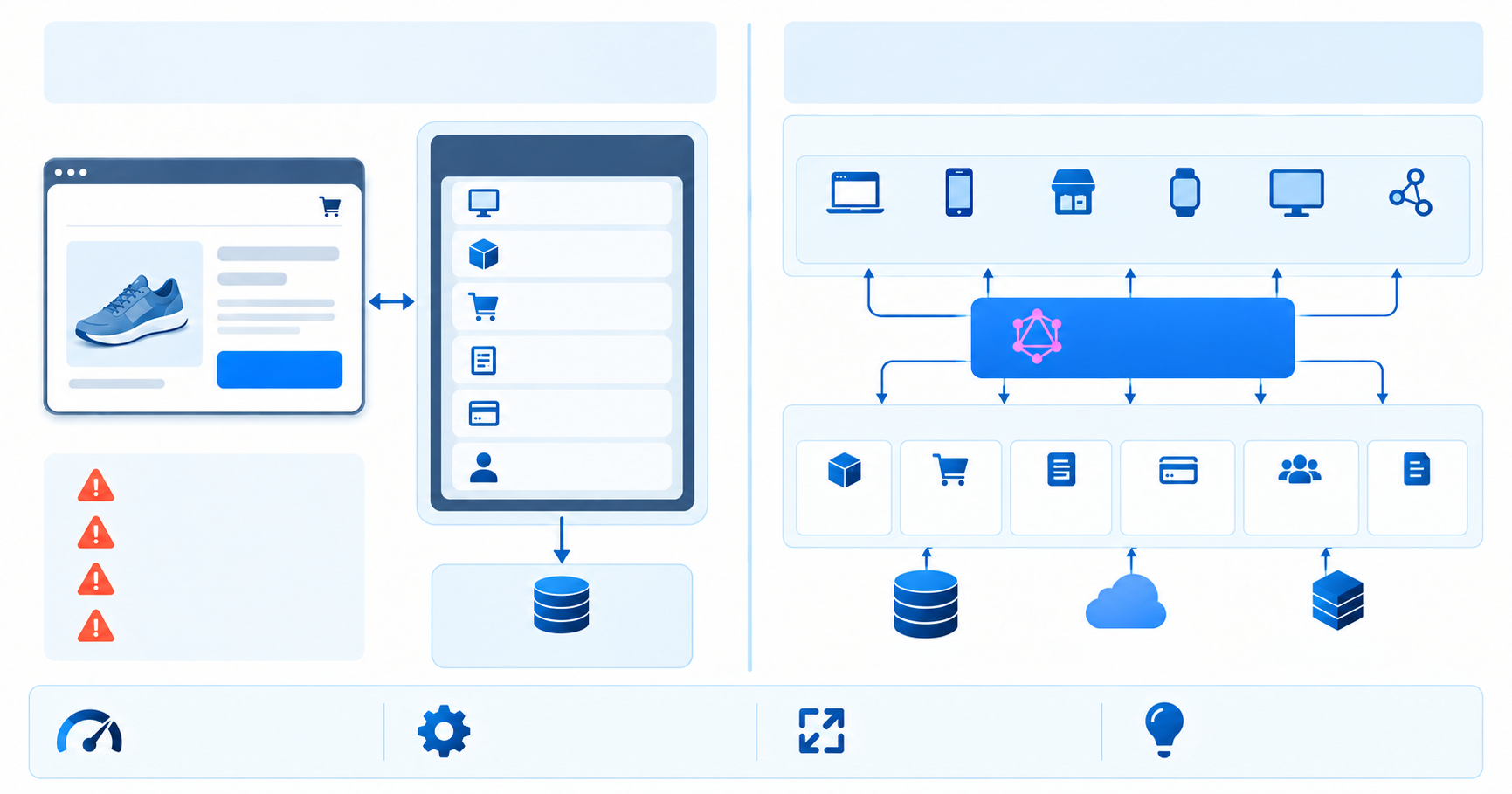
If your brand operates brick-and-mortar stores, pop-up events, or wholesale distribution alongside your e-commerce site, an app bridges the physical-digital divide. Customers can check real-time in-store stock, scan products to view online reviews, or use digital member barcodes at the physical checkout counter. For an architectural look at connecting apps to modern e-commerce backends, review our guide on Shopify vs headless commerce.
When an E-Commerce App Is a Costly Mistake (The Wrong Reasons)
Many brands build apps for flawed reasons and end up with “Ghost Apps” that sit in the App Store with fewer than 500 downloads. Avoid building an app if you fall into these categories:

- You Sell Low-Frequency, High-Consideration Goods
If you sell mattresses, wedding dresses, bespoke jewelry, or major home appliances, a satisfied customer may not buy from you again for 3 to 7 years. Asking them to download an app for a single transaction creates massive friction. Instead, invest your capital into custom website development and conversion rate optimization (CRO) on your mobile web store. - You Don’t Have a Dedicated App Marketing & Retention Strategy
Simply launching an app does not generate downloads. You must actively market the app via post-purchase web banners, exclusive app-only discounts, and paid App Store Search Ads (Apple ASA). If you lack the budget or strategy to acquire app installs, your app will fail to reach critical mass. Our team offers dedicated app store optimization (ASO) services to ensure maximum organic store visibility. - You Assume an App Will Fix Broken Core Marketing
If your website has a low conversion rate due to uncompetitive pricing, weak product-market fit, or poor fulfilment, building an app will not solve the underlying business problem. Fix your foundational bottlenecks first by reading our breakdown on why your e-commerce website is not converting.
Choosing the Tech Stack: Native vs. Cross-Platform (Flutter / React Native)
When developing a commercial e-commerce mobile application, selecting the right technology stack dictates your budget, time-to-market, and long-term maintenance overhead:

1. Cross-Platform Development (Flutter & React Native) — Recommended for 90% of Brands
Instead of hiring two separate teams to write Swift (iOS) and Kotlin (Android), cross-platform frameworks allow engineers to build a single codebase that compiles natively for both operating systems.
- Why Flutter: Flutter enables developers to build and deploy multi-platform applications from a single codebase while integrating with platform-specific features.
- Why React Native: Seamless code sharing if your web store is already built on React or Next.js, allowing web developers to transition effortlessly into mobile development.
2. Pure Native Development (Swift / Kotlin) — For Deep Hardware & Custom Graphic Engines
- Best For: Ultra-high-volume enterprise brands ($50M+ GMV) with complex custom 3D AR rendering pipelines, deep Apple Watch integration, or specialised background audio processing. Explore hiring specialised iOS developers or Android developers
Real-World Case Studies: When Mobile Engineering Drives Exponential Growth
To understand how high-performance mobile apps drive tangible commercial impact, examine these engineering transformations delivered by TechVedhas:
Case 1: Fret Box — High-Engagement Native Mobile Ecosystem
For Fret Box, building a responsive web portal was insufficient for a high-frequency community platform requiring real-time push alerts, offline operational synchronisation, and instant one-tap utility payments. Tech Vedhas engineered an intuitive cross-platform mobile application, driving a 70%+ daily active user engagement rate.
Case 2: Smart Health Assist — Mission-Critical Healthcare Mobile Experience
For Smart Health Assist, secure, HIPAA-compliant patient communication and real-time medical metric tracking required biometric security (Face ID/Touch ID), instant encrypted notifications, and zero-latency device syncing. Building a dedicated mobile app provided the level of reliability and security that web browsers simply cannot deliver.
Common Pitfalls When Launching an E-Commerce Mobile App
Before writing the first line of code, ensure your team avoids these four common mistakes:

- Creating an Isolated Inventory and Order Silo
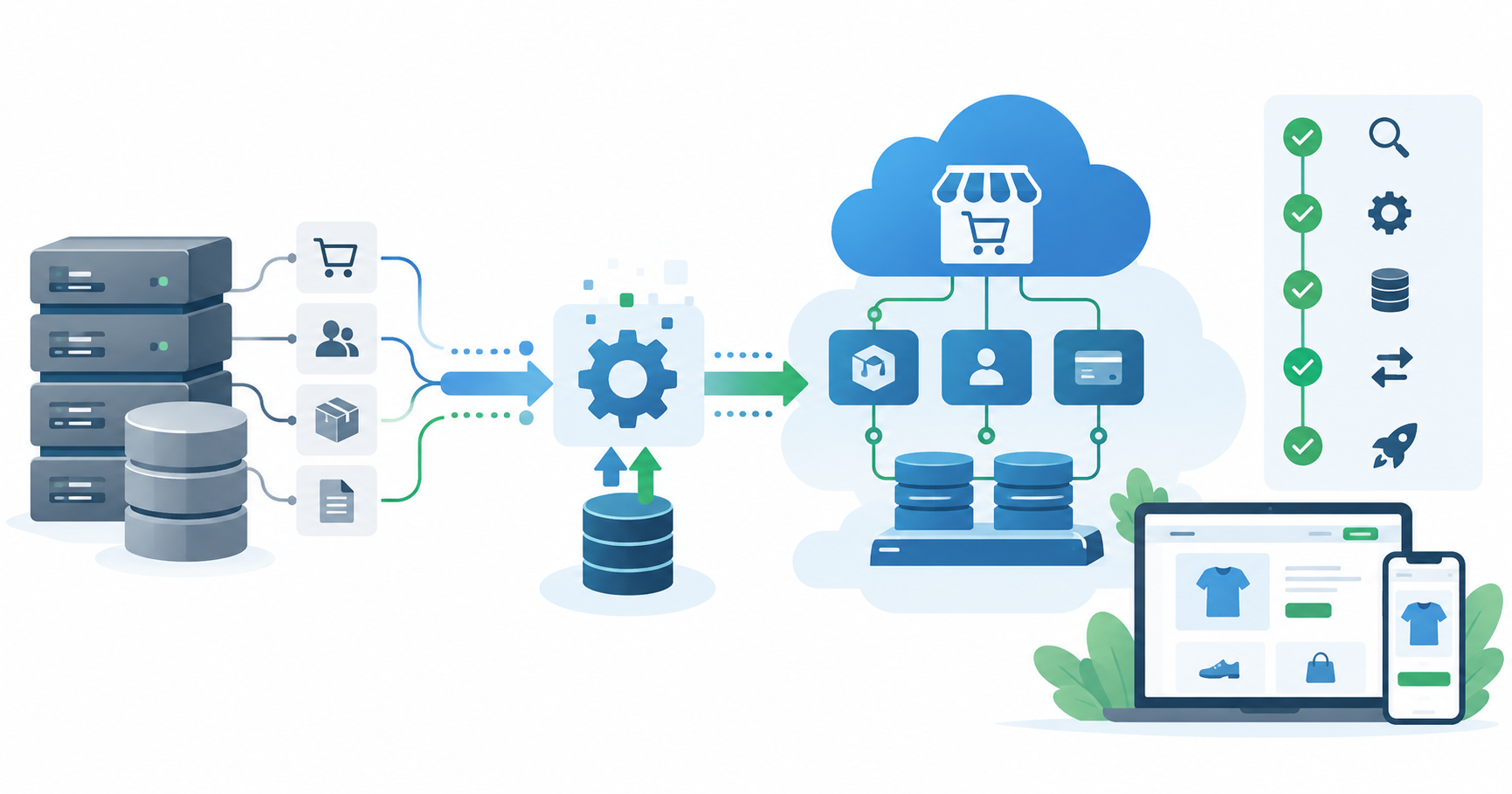
Your mobile app must connect to the exact same backend e-commerce database, ERP, and payment gateway as your web store. If orders placed on the app fail to synchronize with your main warehouse in real time, you risk catastrophic overselling. - Using Aggressive “Download Our App” Popups on Mobile Web
Blocking mobile web visitors with full-screen “Download Our App” modals damages your web conversion rate and triggers Google SEO interstitial penalties. Use subtle smart app banners at the top of the mobile screen or incentivize downloads post-purchase on the order confirmation screen. - Forgetting to Budget for Annual Operating Maintenance
An app is not a one-time expense. Apple and Google release major OS updates every September (iOS 19, Android 16), deprecating older APIs and requiring code updates. Budget approximately 15%–20% of your initial build cost annually for maintenance, bug fixes, and security patches. For a comprehensive cost breakdown, read our e-commerce app development cost guide. - Building a “Web view Wrapper” and Calling It an App
Wrapping your existing website in an i frame and publishing it to the App Store provides zero performance benefits, lacks native gestures, and frequently gets rejected by Apple App Store review guidelines. Build a genuine native or cross-platform application.
Frequently Asked Questions (FAQ)
What is the average cost to build an e-commerce mobile app?
An e-commerce mobile app built with cross-platform frameworks (Flutter or React Native) typically costs between $25,000 and $65,000 for a feature-complete MVP, with enterprise builds requiring custom ERP integrations ranging from $65,000 to $120,000+. For detailed cost matrices, explore our e-commerce app development cost guide.
How long does it take to develop and launch an e-commerce mobile app?
A standard e-commerce mobile app typically requires 12 to 18 weeks from initial UI/UX wireframing and API integration to App Store and Google Play approval.
Will Apple and Google take a 30% cut of my e-commerce sales?
No. Apple and Google’s 15%–30% in-app purchase commissions apply exclusively to digital goods (subscriptions, in-game items, ebooks). Physical e-commerce products (apparel, electronics, food, physical retail) are 100% exempt and process through standard payment gateways (Stripe, Apple Pay, Authorize.net) at standard credit card transaction rates (1.5%–2.9%).
What is the difference between a Progressive Web App (PWA) and a Native App?
A Progressive Web App (PWA) runs inside the mobile browser and can be pinned to the home screen without an App Store download, but has limited push notification capabilities on iOS and cannot access advanced hardware. A Native App (iOS/Android) is downloaded from app stores, offers full hardware access (AR, biometrics, Bluetooth), and delivers superior offline speed and push notification reliability.
Will Apple and Google take a 30% cut of my e-commerce sales?
You can drive app downloads by offering exclusive first-order app discounts, giving app users early access to new product drops, implementing an app-exclusive VIP loyalty rewards tier, and displaying smart banners on post-purchase order confirmation pages.
Can a mobile app synchronize in real-time with my Shopify or custom web store?
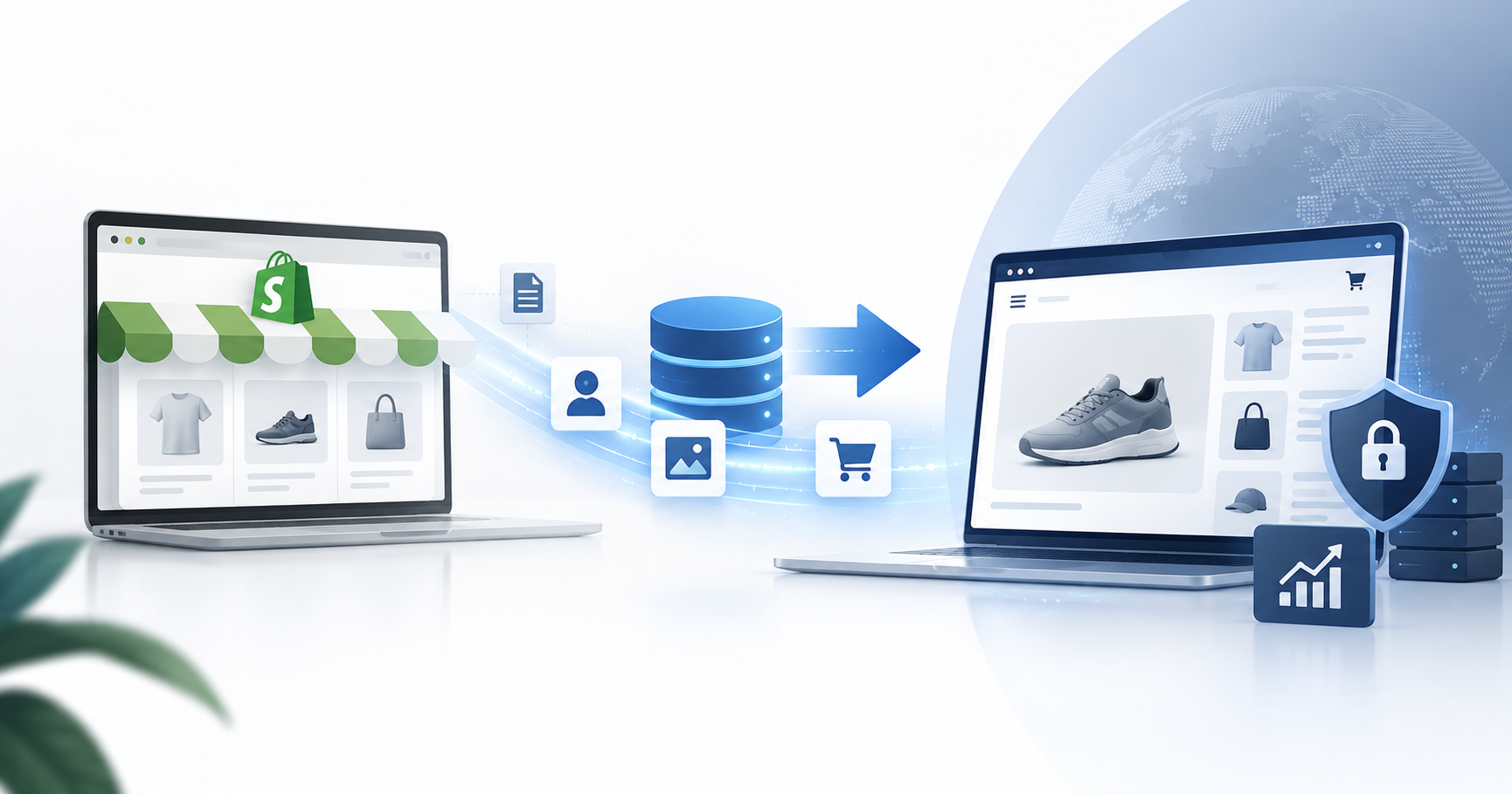
Yes. By utilizing Storefront GraphQL APIs or custom REST microservices, your mobile app connects directly to your existing e-commerce database, ensuring product listings, customer accounts, discount codes, and inventory levels remain perfectly synchronized across web and mobile.
Should I build for iOS or Android first?
With modern cross-platform engineering (Flutter/React Native), you build for both iOS and Android simultaneously from a single codebase. If building pure native, US and European markets typically prioritize iOS first, whereas Latin American and Asian markets prioritize Android.
How much does ongoing mobile app maintenance cost per year?
Annual maintenance typically averages 15% to 20% of the initial development budget to cover annual iOS/Android OS updates, third-party API changes, bug fixes, and continuous performance enhancements.
Scale Your Mobile Commerce Strategy with TechVedhas
Launching a mobile app is one of the highest-leverage investments an e-commerce brand can make—provided it is executed with the right technical architecture and commercial strategy.
Whether your brand requires a high-performance cross-platform mobile app built with Flutter, an omnichannel Headless Shopify API integration, or an optimized responsive web store, TechVedhas provides the full-stack engineering, cloud infrastructure, and app store deployment expertise to maximize your customer lifetime value.
Ready to evaluate your mobile app roadmap?
Explore our mobile application development services, calculate your investment with our project estimation tool, or Book a free strategy consultation with our principal mobile architects today.