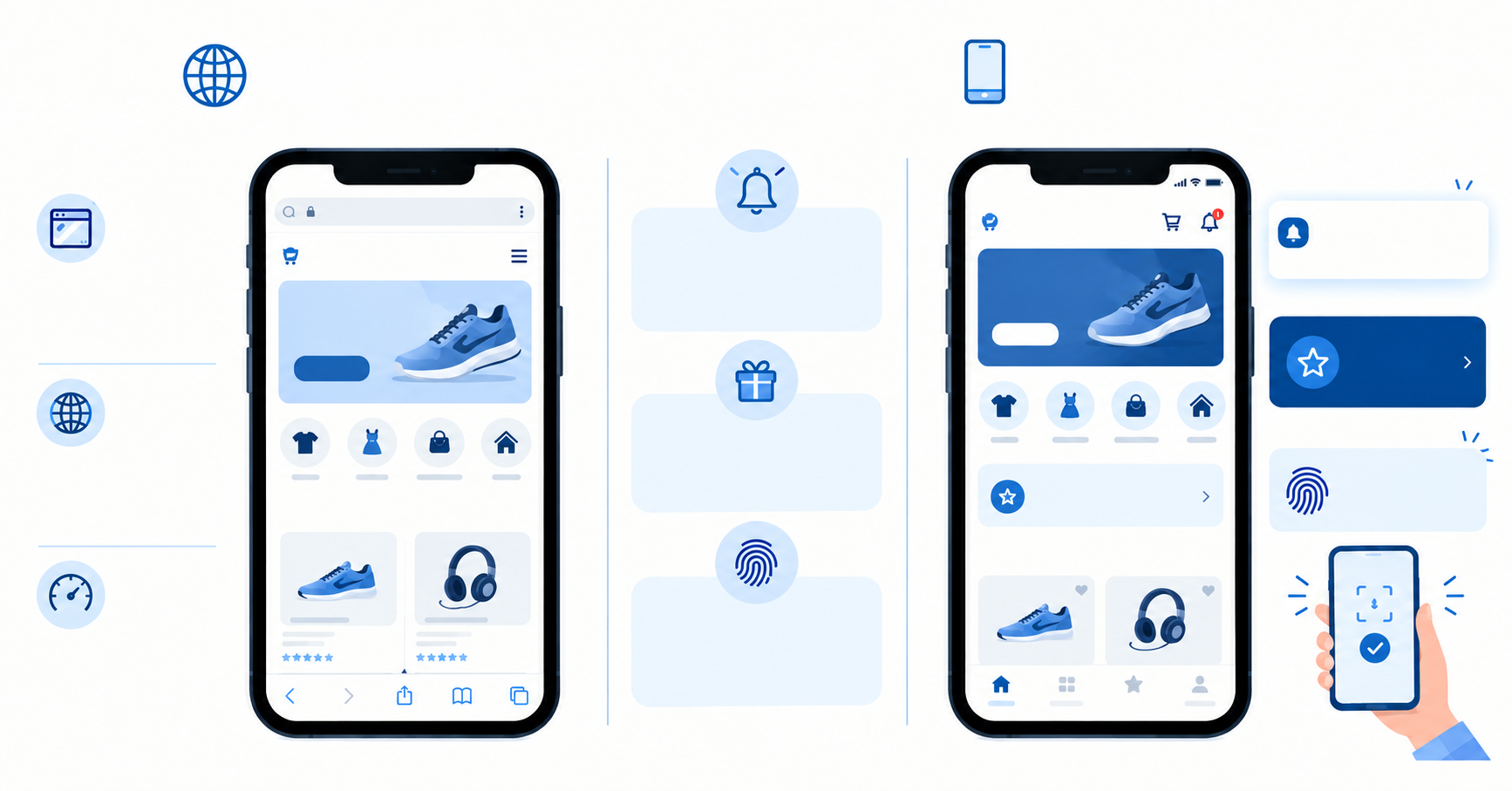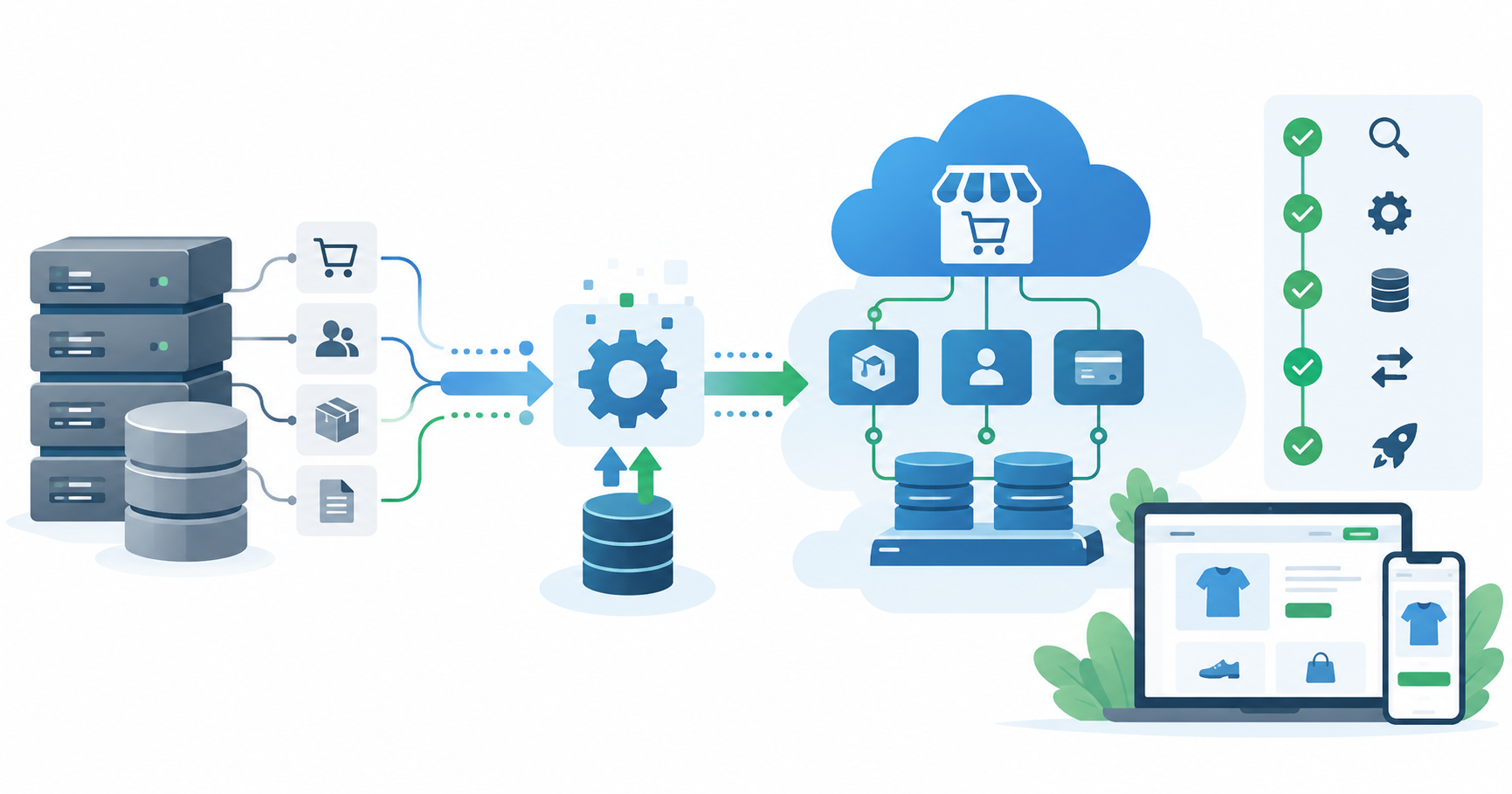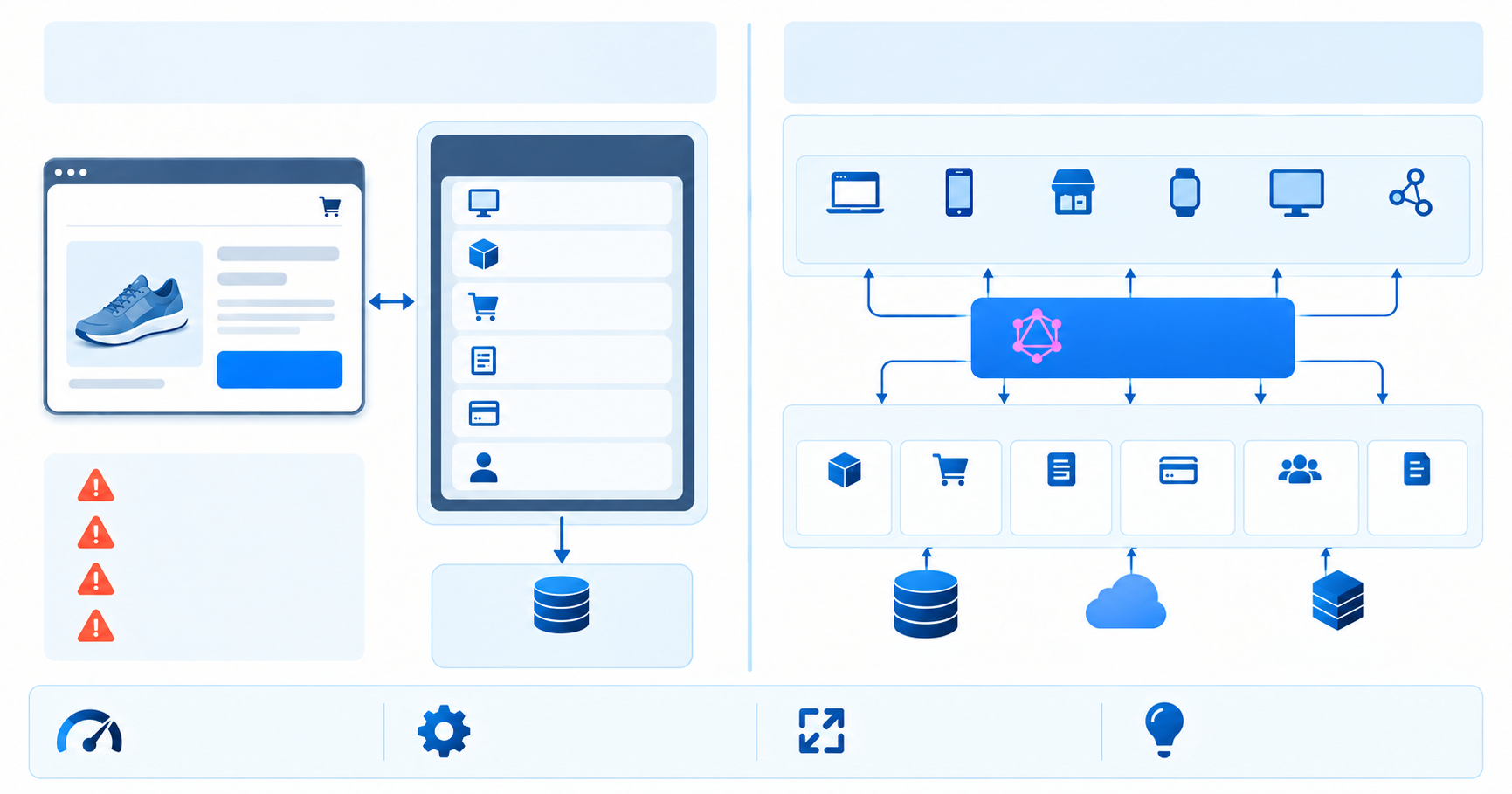
The Legacy Discovery Tax: Why Traditional B2B Tech Marketing Is Failing
Enterprise software vendors and IT services providers are watching organic traffic shrink, form submissions decline, and PPC costs climb — all while doing everything traditional SEO asks of them. Call it the legacy discovery tax: the cost of optimizing for keyword rankings while your buyers have already moved to conversational AI discovery.
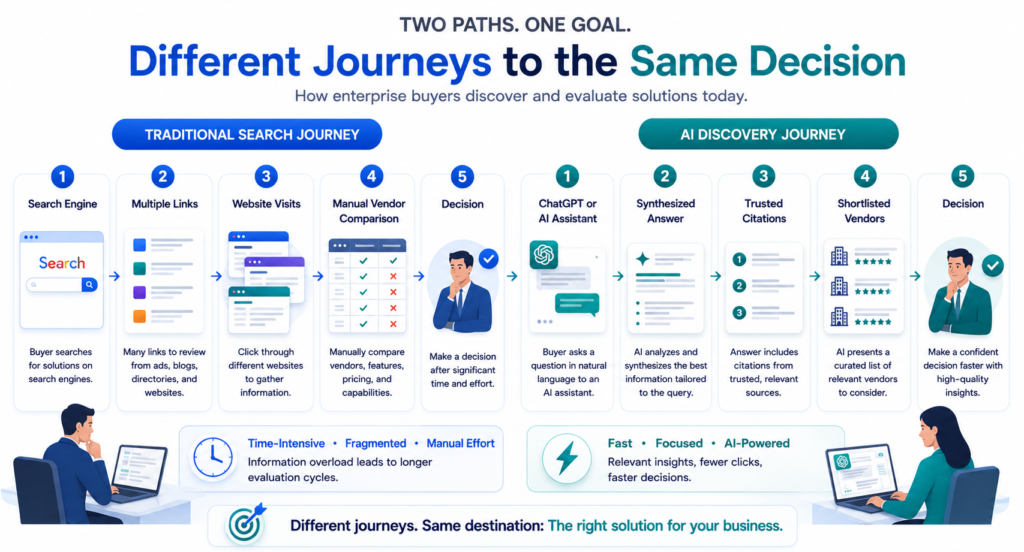
Here’s the scenario: an enterprise architecture team needs to modernize a legacy healthcare platform for HIPAA compliance and lower cloud costs. Two years ago, that team manually reviewed agency blogs and built vendor comparison spreadsheets. Today, they prompt ChatGPT or Perplexity directly — asking for cloud partners with verified HIPAA experience and transparent pricing.
If your case studies, compliance frameworks, and technical capabilities aren’t structured for AI passage extraction, you’re invisible at the exact moment buyers are shortlisting vendors. And the cost compounds: rising customer acquisition costs, longer sales cycles, and a quieter but more damaging problem — enterprise buyers reading AI silence as a signal that they lack modern engineering capability. GEO vs SEO for IT companies isn’t an abstract debate; it’s the difference between being in that shortlist or not.
Core Mechanics of AI Citation
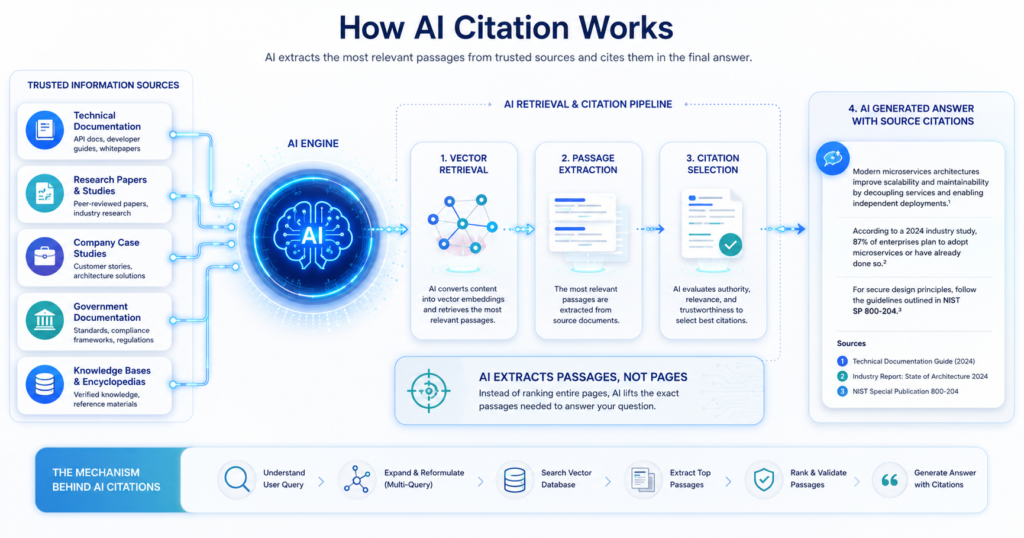
Generative AI engines don’t rank pages — they extract passages. ChatGPT, Perplexity, and Google AI Overviews cite sources based on fact density, direct expert quotations, explicit citations, and clean structural formatting, not domain backlink volume or keyword frequency.
That’s a fundamentally different target than traditional SEO. A page can rank #1 on Google and still never get cited in an AI answer, because the AI isn’t evaluating the whole page — it’s pulling out self-contained “answer blocks” that resolve a specific query on their own. For B2B IT companies, that means your technical content needs to work at the paragraph level, not just the page level: each section should be able to stand alone as something an AI engine could lift and cite directly.
The Difference Between GEO and SEO for IT Companies
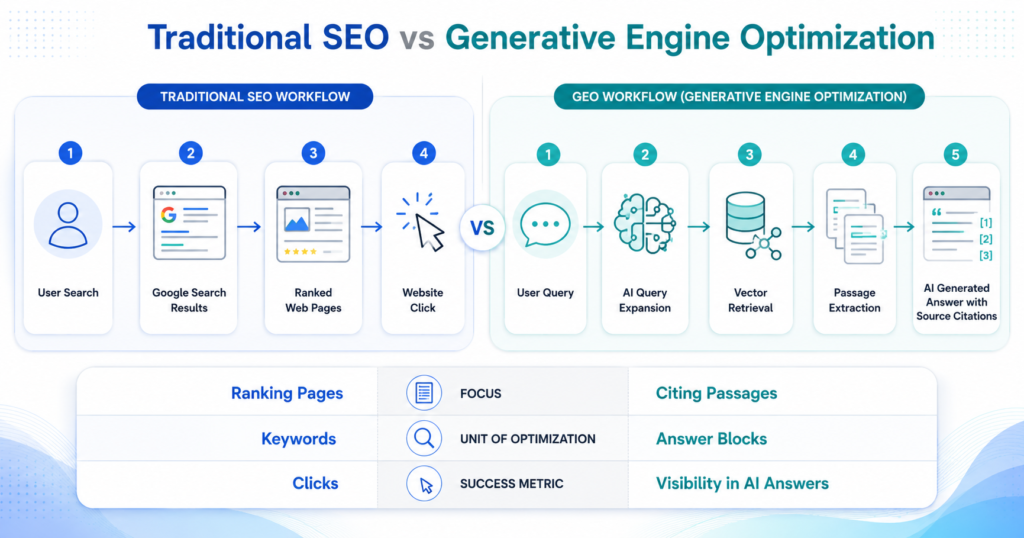
Traditional SEO indexes full pages and ranks them by keyword relevance, engagement signals, and backlink authority — the goal is a click from a results list to your landing page.
What is generative engine optimization? GEO is the practice of preparing content so large language models — running Retrieval-Augmented Generation (RAG) pipelines — can extract, synthesize, and cite specific passages inside a generated answer. Instead of ranking whole pages, AI engines evaluate passage-level facts, clarity, and structural extractability.
Traditional SEO pipeline: User Query → Crawl & Index → Rank URL List → User Clicks a Link GEO pipeline: User Query → Multi-Query Fan-Out → Vector Passage Retrieval → LLM Answer Synthesis with Citations
The research backs this up. Moz’s 2026 analysis of nearly 40,000 queries found that 88% of Google AI Mode citations link to pages that don’t appear in the organic top 10 — ranking well on Google doesn’t guarantee showing up in an AI answer.
The foundational study here is Aggarwal et al. (Princeton, Georgia Tech, the Allen Institute for AI, and IIT Delhi; ACM SIGKDD 2024). Their GEO-bench framework tested 10,000 queries across nine datasets and found that targeted optimization can lift AI-answer visibility by roughly 30-41%, depending on the method:
- Statistics Addition: Adding verifiable data points, percentages, and metrics produced the strongest single gain — a 41% increase on the study’s Position-Adjusted Word Count metric, and a 37% improvement in Subjective Impression scores.
- Quotation Addition: Direct, attributable quotes from named experts improved visibility by up to 28% on Subjective Impression — the second-strongest lever tested.
- The Equalizer Effect: Pages ranking around position 5 in organic search saw a 115.1% visibility increase once optimized with citations and references — meaning GEO lets smaller IT companies out-cite larger incumbents who haven’t adapted.
- Fluency Optimization: Improving sentence clarity alone (no new data added) produced a 28% visibility gain — clean prose is easier for a model to parse and attribute.
- Keyword Stuffing: The classic SEO tactic performed 10% worse than an unoptimized baseline on Perplexity — repetitive keywords actively hurt AI citation.
Separately, University of Toronto research found that generative engines show a systematic bias toward earned media, technical documentation, and third-party coverage — over content a vendor publishes about itself. And structural research (the GEO-SFE and FeatGEO frameworks, both 2026) found that how content is organized — headings, chunking, information hierarchy — has more influence on citation than word-level edits.
Empirical AI Search Ranking Factors for B2B Companies
AI search engines don’t read pages like a human visitor — they run retrieval pipelines that convert text into vector embeddings and pull the most relevant chunks. Six factors determine whether your content gets pulled:
- Fact Density and Specificity: Passages with verifiable figures, benchmarks, and named entities give an LLM the discrete facts it needs to synthesize a confident answer. Aim for at least one verifiable statistic or named technical benchmark every 100 words.
- Earned Media and Third-Party Authority: Models cross-check claims against external sources. Mentions in independent tech publications, client case studies on third-party platforms, and verified partner listings raise citation probability more than anything you publish about yourself.
- Answer-First Section Architecture: Put the direct answer in the first 30% of a section. Self-contained 150-200 word “answer islands” that fully resolve a query retain their meaning even when an AI engine extracts them out of context.
- Multi-Tier Structural Hierarchy: Structure works at three levels: macro (clear H1/H2/H3 hierarchy matching how executives phrase queries), meso (short paragraphs, bullets, comparison tables), and micro (bold text on key entities to signal importance).
- High Fluency and Readability: Clear, direct writing lets a model parse and attribute your content efficiently. Dense marketing prose gets skipped in favor of simpler, well-structured sources.
- Dual Index Accessibility (Bing and Google): Different platforms pull from different indexes. Per Seer Interactive’s citation analysis, 87% of ChatGPT citations match Bing’s top-10 organic results, while 93.67% of Google AI Overview citations match Google’s top 10. Clean indexation in both Bing Webmaster Tools and Google Search Console is non-negotiable for full AI visibility.
How to Optimize Content for AI Overviews and Search Engines
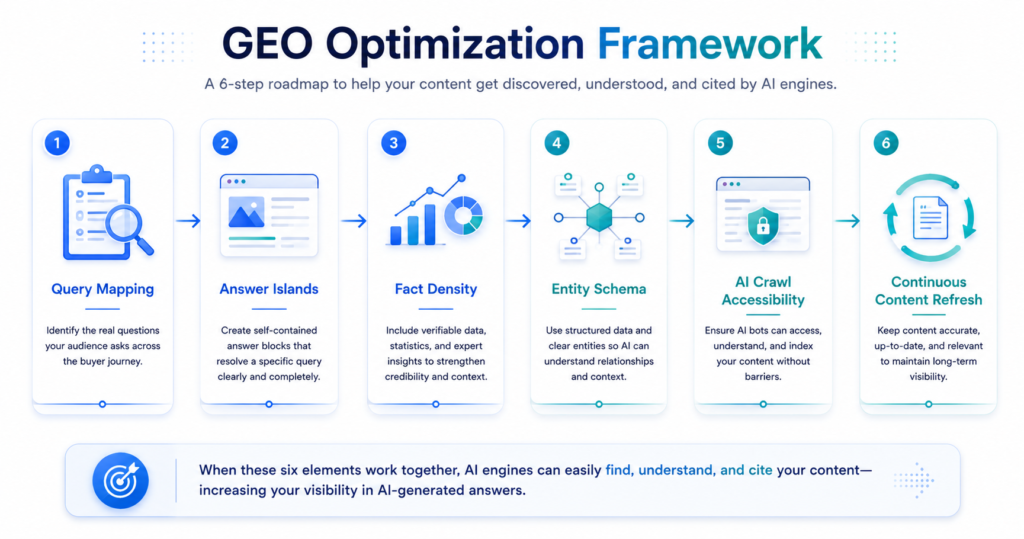
To improve AI search visibility for B2B websites, run this sequence:
- Map query fan-out patterns. Break your main topic into the sub-queries a buyer’s AI tool will actually generate (cost, risk, security, support) and address each one explicitly.
- Build self-contained answer islands. Each section should resolve one question completely in 150-200 words, without needing the rest of the page for context.
- Inject fact density. Replace vague claims (“improves performance”) with specific ones (“reduced application latency after migrating to containerized architecture” — with the real number, sourced).
- Add entity schema markup. Use valid JSON-LD to define your organization, services, and relationships explicitly (see the corrected example below).
- Verify multi-engine indexation. Confirm GPTBot and PerplexityBot aren’t blocked in robots.txt, and that you’re submitting to Bing Webmaster Tools as well as Google Search Console.
- Refresh quarterly. Generative engines weight recency heavily — outdated statistics and framework references cause citation decay.
Comparative Matrix: GEO vs SEO for IT Companies
| Dimension | Traditional SEO | Generative Engine Optimization (GEO) | Business Impact |
|---|---|---|---|
| Primary Goal | SERP position, click volume | Citation frequency, Share of Voice in AI answers | Captures buyers directly inside AI-synthesized answers |
| Buyer Experience | Scans a list of links | Reads a synthesized answer with cited sources | Delivers pre-qualified leads who’ve already seen your credentials |
| Content Architecture | Keyword-optimized landing pages | Data-dense “answer islands,” front-loaded facts | Improves passage extractability for RAG pipelines |
| Authority Proof | Domain authority, backlinks | Earned media, statistical density, expert quotes | Lets challenger IT firms out-cite bigger competitors |
| Platform Scope | Google, Bing | ChatGPT, Perplexity, Gemini, AI Overviews, Claude, Copilot | Visibility across every conversational research tool |
| Ranking Dependency | Requires top-10 SERP placement | 88% of AI Mode citations bypass the top 10 organic results | Citation possible regardless of historical SERP rank |
| Technical Stack | Page speed, meta tags, sitemaps | JSON-LD schema, clear structure, crawler accessibility | Streamlines machine parsing and passage attribution |
Structuring Content for LLM Citations: Technical Implementation
Answer engine optimization for tech companies requires machine-readable entity data in your site’s code. Here’s a schema-valid example (note: the type is Service, not a nonstandard type — this matters, because invalid schema fails validation and won’t help your AI visibility):
// json

{
  "@context": "https://schema.org",
  "@graph": [
    {
      "@type": "Service",
      "@id": "https://techvedhas.com/#cloud-service",
      "name": "Cloud Infrastructure Migration and Optimization",
      "serviceType": "Cloud Infrastructure Migration",
      "provider": {
        "@type": "Organization",
        "name": "Vedhas Technology Solutions LLC",
        "url": "https://techvedhas.com",
        "sameAs": [
          "https://www.linkedin.com/company/vedhas-technology-solutions-pvt-ltd"
        ]
      },
      "areaServed": ["United States", "Global"],
      "hasOfferCatalog": {
        "@type": "OfferCatalog",
        "name": "Enterprise IT Modernization Services",
        "itemListElement": [
          {
            "@type": "Offer",
            "itemOffered": {
              "@type": "Service",
              "name": "Google Cloud Infrastructure Readiness Assessment",
              "description": "Systematic audit reducing cloud expenditure while ensuring high-availability system deployment."
            }
          },
          {

            "@type": "Offer",
            "itemOffered": {
              "@type": "Service",
              "name": "HIPAA-Compliant Healthcare Platform Development",
              "description": "Secure telemedicine and EHR software solutions built in compliance with US healthcare data privacy regulations."
            }
          }
        ]
      }
    }
  ]
}
Beyond schema, make sure your robots.txt isn’t blocking AI crawlers (GPTBot, PerplexityBot) — that alone can silently erase you from AI search entirely.
The Solution: How Vedhas Technology Solutions Helps IT Companies Win Both SEO and GEO
Vedhas Technology Solutions provides end-to-end technology and business transformation services, built around the same principle this guide has walked through: modern IT companies need to be visible to both traditional search and AI-driven discovery, not just one.
Based in Hyderabad, India, Vedhas works with enterprise and mid-market technology companies on:
- Healthcare Platform Modernization — building secure, HIPAA-compliant platforms for medical practices, diagnostic labs, and telemedicine providers, with compliance designed into the architecture from day one rather than retrofitted later.
- B2B SaaS Growth & Content Strategy — helping SaaS and technology platforms structure their marketing content, messaging, and lead-generation funnels around what today’s buyers — and the AI tools they use — actually respond to.
- Cloud Infrastructure Optimization — assessing and modernizing cloud environments to reduce operational overhead and improve reliability, using platforms like Google Cloud and AWS.
- Custom Full-Stack Engineering — building and modernizing web and mobile applications using current frameworks (React, Node.js, Flutter) and enterprise-grade database and CMS systems.
What distinguishes Vedhas’s approach:
- Deep regulatory and industry context — years of experience across healthcare, education, e-commerce, and e-governance means compliance requirements (HIPAA, SOC 2, data protection) are treated as a design input, not an afterthought.
- Transparent, upfront pricing — clear project minimums and hourly rates communicated before work begins, with no hidden tiers.
- Structured project communication — regular progress updates and a documented, email-first communication process, so decisions and changes are always traceable.
- A single point of accountability — strategy, engineering, cloud infrastructure, and content/marketing under one team, rather than coordinating multiple vendors.
For an IT company evaluating how to show up in both Google’s results and AI-generated answers, that combination — technical modernization plus content structured for machine readability — is exactly what closes the GEO vs SEO gap this guide has described.
FAQs: GEO vs SEO for IT Companies
How long does it take to see results from GEO?
Because AI engines refresh their citation sources more frequently than traditional search indexes, structural and content changes can show up in AI answers within days to a few weeks — faster than typical SEO ranking improvements, which often take months.
Can the same page serve both SEO and GEO, or do I need separate content?
The same page can serve both, provided it’s structured for extraction — clear headings, self-contained sections, and front-loaded facts work for a human scanning a results page and for an AI model pulling a citable passage. You don’t need a parallel content strategy, just a more disciplined one.
Which AI platforms should an IT company prioritize first?
Start with whichever platform your buyers actually use to research vendors — for most B2B IT audiences, that’s ChatGPT and Perplexity. Since ChatGPT draws heavily from Bing’s index and Google AI Overviews draws from Google’s, prioritizing one over the other comes down to which underlying search index your content already performs better in.
Does GEO work for niche, highly technical B2B topics, or mainly broad consumer queries?
It works for niche technical topics — often better than for broad consumer queries. Less content competes for a specific technical question (like a HIPAA-compliant migration approach), so a well-structured answer has a clearer path to being the one an AI engine cites.
How do I know if my content is actually being cited by AI engines?
Ask the AI platforms your buyers use the exact questions your content answers, and check whether your company or content is referenced in the response. Some SEO platforms have also started adding AI-citation tracking alongside traditional rank tracking, if you want this monitored on an ongoing basis.
Do I need to rewrite all my existing content for GEO, or start fresh?
Rewrite selectively rather than starting over. Audit your highest-value pages first — the ones addressing questions your buyers are most likely to ask an AI tool — and restructure those into answer-first, fact-dense sections. Most sites don’t need a full content overhaul, just targeted restructuring of the pages that matter most.
Does GEO require a different content team or skill set than traditional SEO?
Not a different team, but a different habit. The same writers and marketers who handle SEO can produce GEO-ready content — the shift is in discipline: leading with the answer, backing claims with specific data, and avoiding filler transitions that AI parsers tend to skip over anyway.
Is GEO a passing trend, or is it here to stay for B2B IT marketing?
As more enterprise buyers use conversational AI tools for vendor research, GEO is becoming a permanent part of how B2B discovery works, not a temporary shift. Traditional SEO isn’t going away, but treating GEO as optional is increasingly a competitive disadvantage rather than a safe wait-and-see position.
Where Your AI Search Visibility Stands Today
Enterprise buyers are already asking ChatGPT, Perplexity, and Google AI Overviews the questions your sales team used to answer first. The only way to know whether your company appears in those conversations is to evaluate how well your website and content are prepared for AI-driven discovery.
Strong technical expertise alone isn’t enough if AI engines can’t easily understand, extract, and cite your content. A structured assessment helps identify the gaps limiting your visibility before they become missed business opportunities.
A GEO Readiness Assessment Covers Three Key Areas
- Cloud Cost & Infrastructure Review
Identify where your current architecture is creating unnecessary operational overhead, performance bottlenecks, or avoidable cloud spending. - Compliance & Security Check-In
Evaluate how your existing systems align with HIPAA, SOC 2, and other relevant security and data protection requirements that enterprise buyers expect. - AI Search Visibility Check
Analyze how extractable, structured, and citable your content is across ChatGPT, Perplexity, and Google AI Overviews, while identifying opportunities to improve AI citation potential.
Beyond these technical reviews, the assessment highlights practical improvements for your content architecture, structured data, crawler accessibility, and answer-first content strategy—helping you build visibility across both traditional search engines and AI-powered discovery platforms.
The companies that gain an advantage in AI search won’t necessarily be the largest. They’ll be the ones that recognize visibility gaps early and act before their competitors do.
Find out where you stand before your competitors do.
GEO and SEO Aren’t a Choice — They’re Both the Cost of Entry
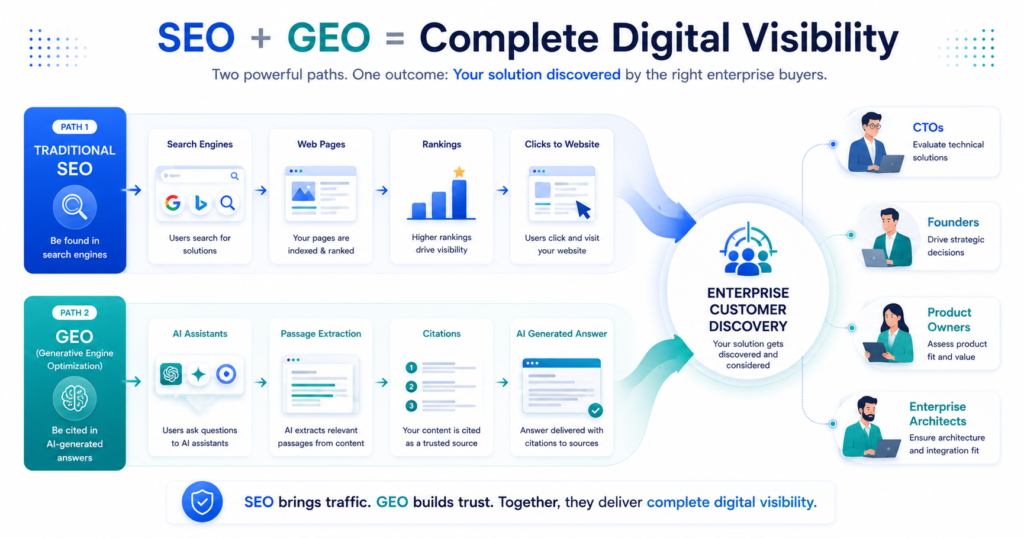
The IT companies that show up in AI-generated answers a year from now won’t be the ones with the biggest ad budgets — they’ll be the ones who treated GEO vs SEO for IT companies as a “both, not either” problem starting today.
Traditional SEO still earns you the organic click. GEO earns you the citation inside the answer your buyer never has to click away from. Skip one, and you’re only solving half of how enterprise buyers actually find their vendors now.
The technical work — structured content, valid schema, fact-dense answer islands, clean crawler access — isn’t complicated, but it does take deliberate effort most IT companies haven’t started yet. That gap is the opportunity. Companies that close it now get cited consistently while their slower-moving competitors stay invisible to the exact tools their buyers are already using.