Outsourcing mobile app development to India has been a popular strategy for businesses for more than a decade. Companies have traditionally turned to Indian development teams for cost savings, access to skilled talent, and the ability to scale projects quickly.
However, the outsourcing landscape in 2026 looks very different from what it did just a few years ago. Advances in AI-assisted development, stricter compliance requirements, mature cross-platform technologies, and evolving client expectations have fundamentally changed how businesses evaluate outsourcing partners.
While many of the traditional advantages of outsourcing to India remain intact, the factors that determine success have evolved significantly. Understanding what has changed—and what hasn’t—can help founders, CTOs, and business leaders make better outsourcing decisions in 2026.
To navigate this landscape successfully, technology leaders must understand which core operational dynamics remain stable and which technological realities have fundamentally transformed.
What Remains Unchanged in Offshore App Development
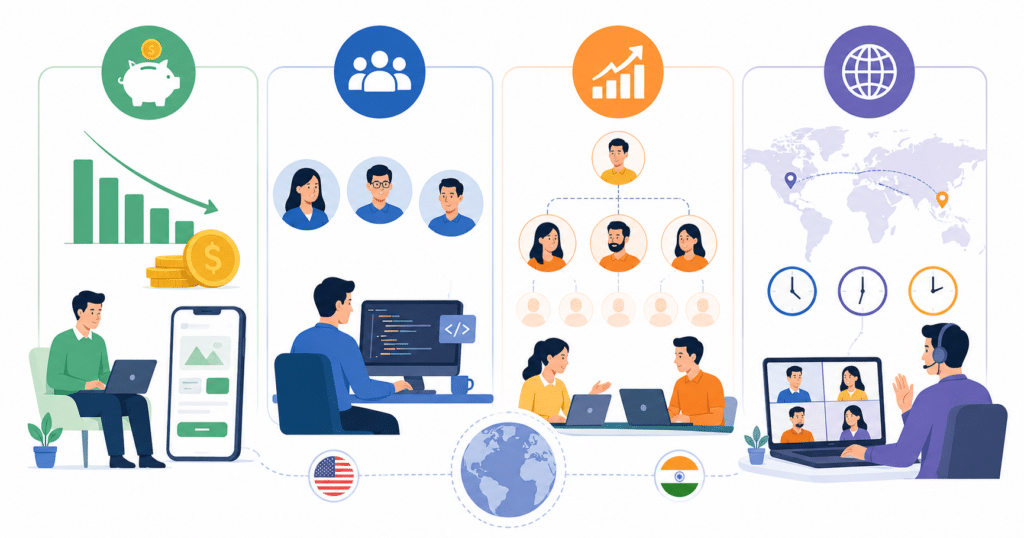
While software development methodologies continue to evolve, several foundational principles of offshore software development in India remain highly consistent. These enduring characteristics form the baseline business case for global delivery models.
The Underlying Cost Advantage
The financial justification for offshore development continues to rely on significant labor arbitrage. Building an in-house development team in the United States requires substantial capital, including competitive base salaries, benefits, office overhead, and continuous professional training. By contrast, partnering with a professional offshore development partner in India allows organizations to transition fixed overhead into variable operational expenses.
This financial variance remains highly pronounced when comparing regional rates across the global software outsourcing market.
| Development Location | Average Hourly Rate (Senior Engineer) | Typical Minimum Project Commitment | Primary Operational Characteristics |
|---|---|---|---|
| United States & Canada | $150 – $250 / hour | $50,000+ | Local timezone alignment, simplified legal frameworks, and high overall cost. |
| Western Europe | $100 – $180 / hour | $40,000+ | Strong regulatory alignment, structured engineering practices, and premium pricing. |
| Eastern Europe | $60 – $100 / hour | $25,000+ | Deep technical depth, 1.5x–2x cost compared to India, and skilled backend engineers. |
| Latin America | $50 – $90 / hour | $25,000+ | Strong timezone overlap with the United States, moderate costs, and collaborative cultures. |
| India (Tier 1 Verified) | $25 – $49 / hour | $10,000–$50,000+ depending on project scope | Vast scalability, deep cross-platform and AI expertise, and optimized cost structures. |
These rate differentials demonstrate that for equivalent software quality, utilizing verified Indian engineering teams provides 40% to 60% overall savings, allowing organizations to allocate additional capital toward marketing, user acquisition, and product strategy.
Unmatched Scalability and Talent Access
The sheer scale of India’s developer ecosystem remains a decisive strategic asset. India continues to produce one of the world’s largest pools of engineering and technology graduates.
This massive talent pool provides organizations with unparalleled hiring flexibility. While building a 10-person specialized team in Western tech hubs can require several months of recruitment and onboarding, a dedicated development team in India can be assembled, structured, and deployed within weeks. This capacity to scale rapidly ensures that development pipelines remain uninterrupted during sudden feature expansions or platform transitions.
What Hasn’t Changed?
- India continues to offer one of the world’s largest pools of software engineering talent.
- Businesses can still scale teams faster and more cost-effectively than in many Western markets.
- Access to specialized skills remains a major reason companies outsource development to India.
The Timezone Delivery Dynamic
The geographic offset of 9.5 to 12.5 hours between the United States and India remains a highly effective operational asset when managed with structured communication. This division of labor enables a continuous “follow-the-sun” development lifecycle.
Under this model, onshore product owners define requirements, review features, and deliver feedback during the domestic business day. The offshore development team receives these specifications, executes the engineering tasks during their local shift, and delivers compiled code, unit tests, and updated prototypes overnight. This continuous cycle effectively doubles development velocity, allowing organizations to accelerate time-to-market and respond rapidly to competitive shifts.
While timezone differences can accelerate development through follow-the-sun workflows, they also require structured communication and overlapping collaboration windows.
The Strategic Revolution: What Has Shifted in 2026
While the baseline financial and scale advantages remain stable, the technical capabilities, regulatory environments, and development methodologies of Indian software engineering have changed fundamentally.
From Cost Arbitrage to Strategic Innovation
A decade ago, offshore software development India was frequently associated with basic coding tasks, administrative legacy maintenance, and standard migration services. In 2026, the market has matured completely. Leading organizations in India operate as true digital product development partners, providing strategic business consulting, high-level system architecture, and complex product engineering services.
This evolution is driven by the rise of complex technology stacks, high-performance computing, and localized engineering innovation.Validating India’s rapid rise as a global tech titan, The Economic Times highlights that local developers have driven over 7.5 million contributions to open-source AI—a milestone backed by the Press Information Bureau (PIB), which ranks India as the second-largest contributor to GitHub AI projects globally. Consequently, offshore teams are frequently selected to design and deploy complex architectures, including predictive analytics engines, natural language processing pipelines, and high-availability transaction systems.
AI-Assisted Engineering and Compute Infrastructure

The integration of artificial intelligence into the software delivery pipeline has drastically accelerated engineering output. Rather than treating AI as an external novelty, modern Indian agencies use tools like GitHub Copilot, ChatGPT, and Gemini as standard, integrated infrastructure to automate code generation, speed up debugging, and automate quality assurance workflows.
This acceleration is further supported by major national investments. Backed by the IndiaAI Mission, which provides significant compute funding and over 38,000 graphics processing units (GPUs) available to developers at highly subsidized rates, Indian engineering teams possess direct access to the high-performance computing resources necessary to train, fine-tune, and deploy custom machine learning models efficiently.
| Before 2026 | In 2026 |
|---|---|
| Developers wrote most code manually | AI accelerates coding and testing |
| Larger teams required | Smaller teams deliver faster |
| Development cycles longer | Faster iteration cycles |
The Maturation of Cross-Platform Development
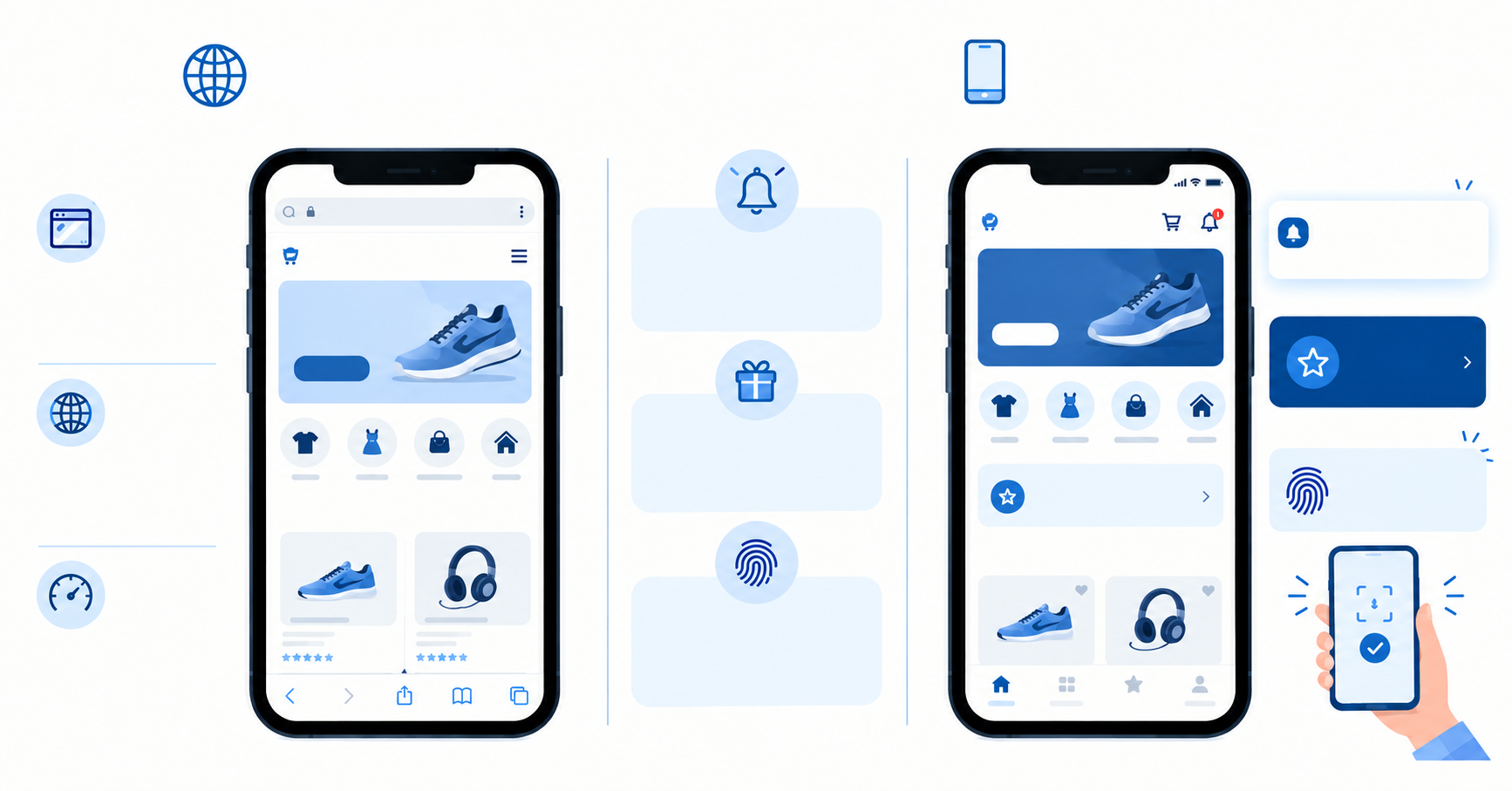
One of the biggest changes in mobile app development is the maturity of cross-platform frameworks like Flutter and React Native. Businesses no longer need separate teams and codebases for iOS and Android to build high-quality applications.
In 2026, these frameworks enable organizations to launch faster, reduce development costs, and simplify long-term maintenance through a single codebase. As a result, companies can bring products to market more quickly while maintaining a consistent user experience across platforms.
What Has Changed?
- Cross-platform frameworks are now mature enough for enterprise-grade applications.
- A single codebase can support both iOS and Android efficiently.
- Development and maintenance costs are lower than traditional native development.
- Faster release cycles help businesses respond quickly to market needs.
This shift has made outsourcing mobile app development to India even more attractive for organizations seeking a balance of quality, speed, and cost efficiency..
Faster and More Efficient Infrastructure
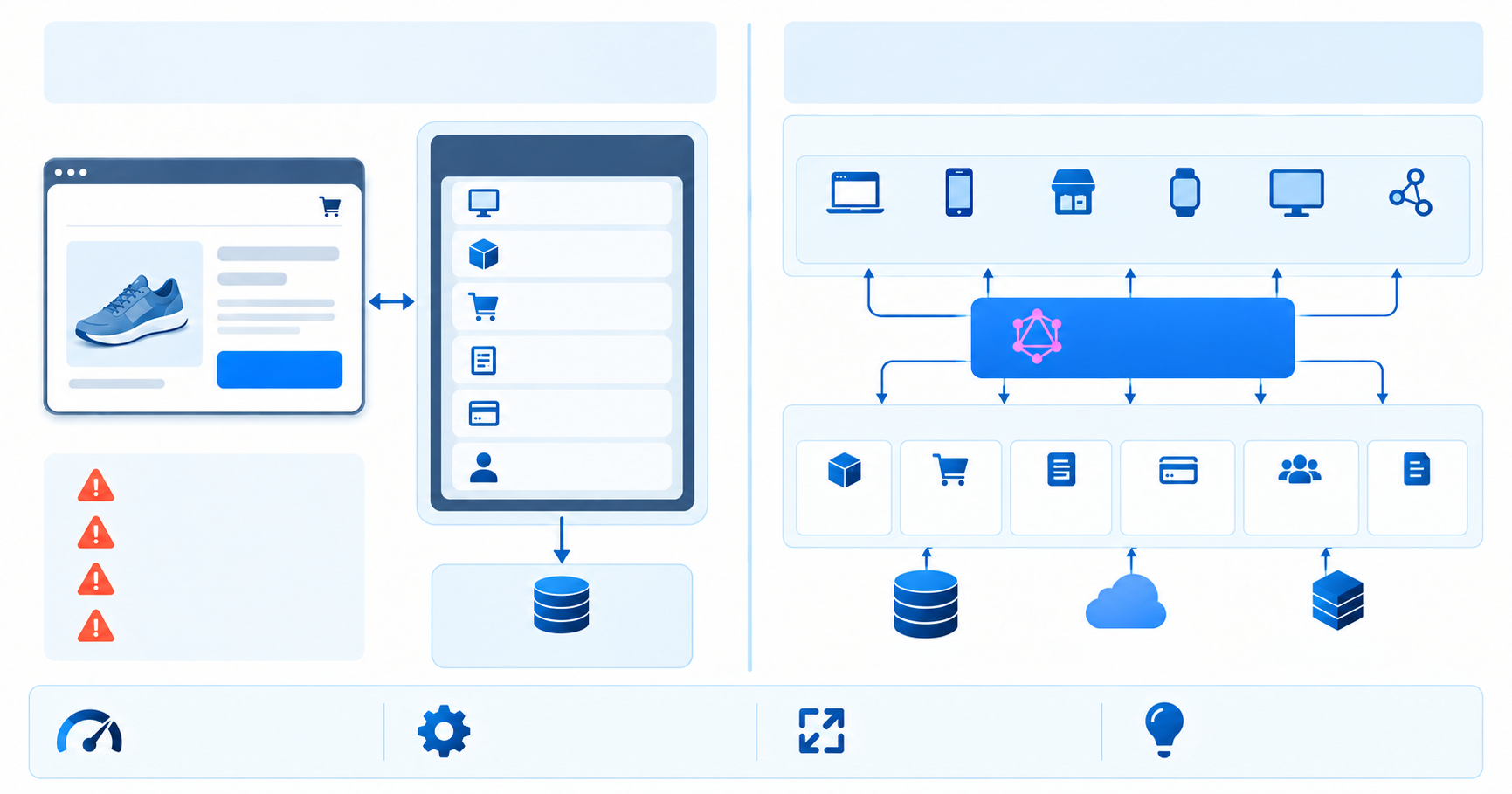
Another major shift in 2026 is the growing focus on performance, scalability, and cloud cost optimization. Businesses are no longer evaluating development partners solely on their ability to build applications—they are also looking for teams that can deliver efficient, scalable systems that reduce long-term operating costs.
Modern development practices and cloud-native architectures help applications launch faster, consume fewer resources, and handle increasing user demand more effectively. This is especially important for organizations running large-scale platforms, SaaS products, or serverless applications where infrastructure costs can quickly grow with usage.
What Has Changed?
- Greater emphasis on cloud cost optimization and operational efficiency.
- Faster application performance and improved user experiences.
- More scalable architectures that support future growth.
- Increased focus on reducing long-term maintenance and infrastructure expenses.
For CTOs and technology leaders, this means outsourcing partners are now expected to contribute not just to development, but also to overall business efficiency, scalability, and cost management.
Compliance Expectations Are Higher Than Ever

As mobile applications handle increasing amounts of personal, financial, and health-related data, security and compliance have become critical factors when outsourcing app development. In 2026, businesses are evaluating development partners not only on technical expertise but also on their ability to meet evolving regulatory and data protection requirements.
HIPAA and Healthcare Compliance
For healthcare organizations, compliance requirements have become more stringent. Recent updates to the HIPAA Security Rule have increased expectations around data protection, access controls, and auditability. As a result, healthcare applications must be designed with compliance in mind from the beginning rather than treating it as a post-development requirement.
Key considerations include:
- End-to-end encryption for sensitive patient data.
- Multi-factor authentication and role-based access controls.
- Comprehensive audit trails for data access and modifications.
- Proper compliance agreements and security documentation.
DPDP and Data Privacy in India
India’s Digital Personal Data Protection (DPDP) Act has also reshaped how software development companies handle user data. Organizations processing personal information are now expected to follow stricter consent, storage, and data management practices.
To meet these requirements, leading development partners are implementing:
- Strong data governance and privacy controls.
- Regular security audits and risk assessments.
- Secure data storage and processing practices.
- Automated consent and data management workflows.
What Has Changed?
- Compliance is now a board-level business concern rather than just an IT responsibility.
- Security and privacy requirements are being integrated into projects from day one.
- Businesses are placing greater emphasis on vendor security practices and compliance expertise.
- Regulatory requirements across healthcare, finance, and consumer applications continue to become more rigorous.
For business leaders, this means selecting an outsourcing partner is no longer just about cost and development speed. Security, compliance, and risk management have become equally important factors in determining the success of a mobile app project.
Evaluating Project Complexity and Real Cost Frameworks
Navigating the financial realities of mobile app development outsourcing in India in 2026 requires moving away from single flat-rate assumptions. Total cost of ownership is determined by features, platform depth, data architecture, and regulatory requirements.
To provide absolute budgetary transparency, the average cost ranges and timelines are categorized by project complexity.
| Application Complexity | Average Cost Range (India Dev) | Average Development Timeline | Structural Characteristics |
|---|---|---|---|
| Simple MVP | $8,000 – $25,000 | 2 – 4 months | Standard UI, basic email authentication, limited static content, and basic backend databases. |
| Medium Complexity | $25,000 – $75,000 | 4 – 8 months | Custom UI, role-based access, payment processing, third-party API integrations, and moderate security layers. |
| Complex Enterprise | $75,000 – $250,000+ | 8 – 12+ months | Real-time data sync, machine learning, complex offline-first capabilities, and high-availability architecture. |
This structure demonstrates that starting with a highly refined Minimum Viable Product (MVP) allows early-stage companies to validate ideas quickly before committing extensive capital to full-scale platform builds.
What Hasn’t Changed?
- India remains one of the most cost-effective destinations for mobile app development.
- Outsourcing continues to offer significant savings compared to building equivalent in-house teams in North America and Western Europe.
- Starting with an MVP remains one of the most effective ways to reduce risk and validate product ideas before larger investments.
How to Choose an App Development Company in India Successfully

Selecting an offshore mobile app development company requires a shift away from choosing the lowest hourly quote. High-quality, low-risk software engineering relies on verified technical capabilities, structured project management, and cultural alignment.
New Evaluation Criteria in 2026
While traditional factors such as cost, technical expertise, and communication remain important, the outsourcing landscape has evolved significantly. In 2026, business leaders are evaluating app development partners on a broader set of criteria that directly impact long-term success, security, and scalability.
- AI Capabilities: Modern development teams are increasingly leveraging AI-assisted tools to accelerate coding, testing, quality assurance, and documentation. Organizations should assess whether a potential partner can effectively utilize AI to improve delivery speed while maintaining code quality and security standards.
- Security Maturity: As cybersecurity threats and regulatory requirements continue to grow, security can no longer be treated as an afterthought. Development partners should demonstrate secure development practices, vulnerability management processes, and a strong understanding of data protection requirements.
- Product Strategy Expertise: The most valuable outsourcing partners contribute more than technical execution. They understand business objectives, user needs, market dynamics, and product roadmaps, helping organizations make better product decisions throughout the development lifecycle.
- Compliance Experience: For industries such as healthcare, fintech, and enterprise software, compliance expertise has become a critical evaluation factor. Partners should have experience working with regulations such as HIPAA, GDPR, SOC 2, and India’s DPDP Act, ensuring compliance requirements are addressed from the beginning of the project rather than later in the development process.
Key Verification Metrics
To mitigate common software outsourcing challenges, technology leaders utilize a structured, five-point evaluation framework before signing any vendor contract.
- Verified Case Studies and Portfolios: The partner must provide case studies documenting complex system integrations and scalable digital transformations.
- Regulatory Compliance Expertise: For healthcare, fintech, or enterprise systems, the team must demonstrate clear knowledge of HIPAA, GDPR, or SOC2 frameworks, including the ability to sign binding BAAs.
- Client-Facing Project Management: The vendor must assign a dedicated project manager and commit to structured, weekly communication schedules.
- IP and Source Code Ownership: Contracts must explicitly state that all source code, design assets, and intellectual property transfer entirely to the client upon milestone payment.
- Direct Technical Interviews: CTOs and engineering managers should conduct direct technical evaluations of the senior developers assigned to the project to verify practical, hands-on capabilities.
Red Flags to Avoid
Enterprise decision-makers should watch for specific vendor warning signs during early-stage discussions:
- Guaranteed Rankings or Unrealistic Timelines: Any agency promising complex, customized app delivery in under a month is misrepresenting the development lifecycle.
- Unclear Pricing or Hidden Fees: Transparent pricing is non-negotiable; complex billing structures that hide secondary costs often lead to massive budget overruns.
- Lack of Compliance and Security Awareness: If a vendor treats security as a minor task or lacks knowledge of regional data laws, they represent a significant legal liability.
- Pressure Tactics and Forced Signings: Professional partnerships are built on mutual trust; high-pressure sales cycles are a strong indicator of low-quality service delivery.
Real-World Examples of Modern Outsourcing in 2026
Perhaps the clearest sign of how outsourcing to India has changed is the type of projects being delivered today. While offshore teams were once primarily associated with coding and maintenance work, they are now helping organizations build complex digital products, modernize enterprise systems, and drive business innovation across industries.
Healthcare and Telemedicine Platforms
Healthcare organizations are increasingly partnering with Indian development teams to build secure, compliant digital health solutions. These platforms often include telemedicine capabilities, appointment scheduling, patient management workflows, and data security measures designed to meet evolving healthcare regulations.
B2B SaaS and CRM Solutions
Many SaaS companies are leveraging offshore development teams to accelerate product development, improve customer acquisition workflows, and integrate marketing automation capabilities. Modern outsourcing partnerships often extend beyond engineering to include product optimization, analytics, and user experience improvements.
Enterprise Modernization and Cloud Transformation
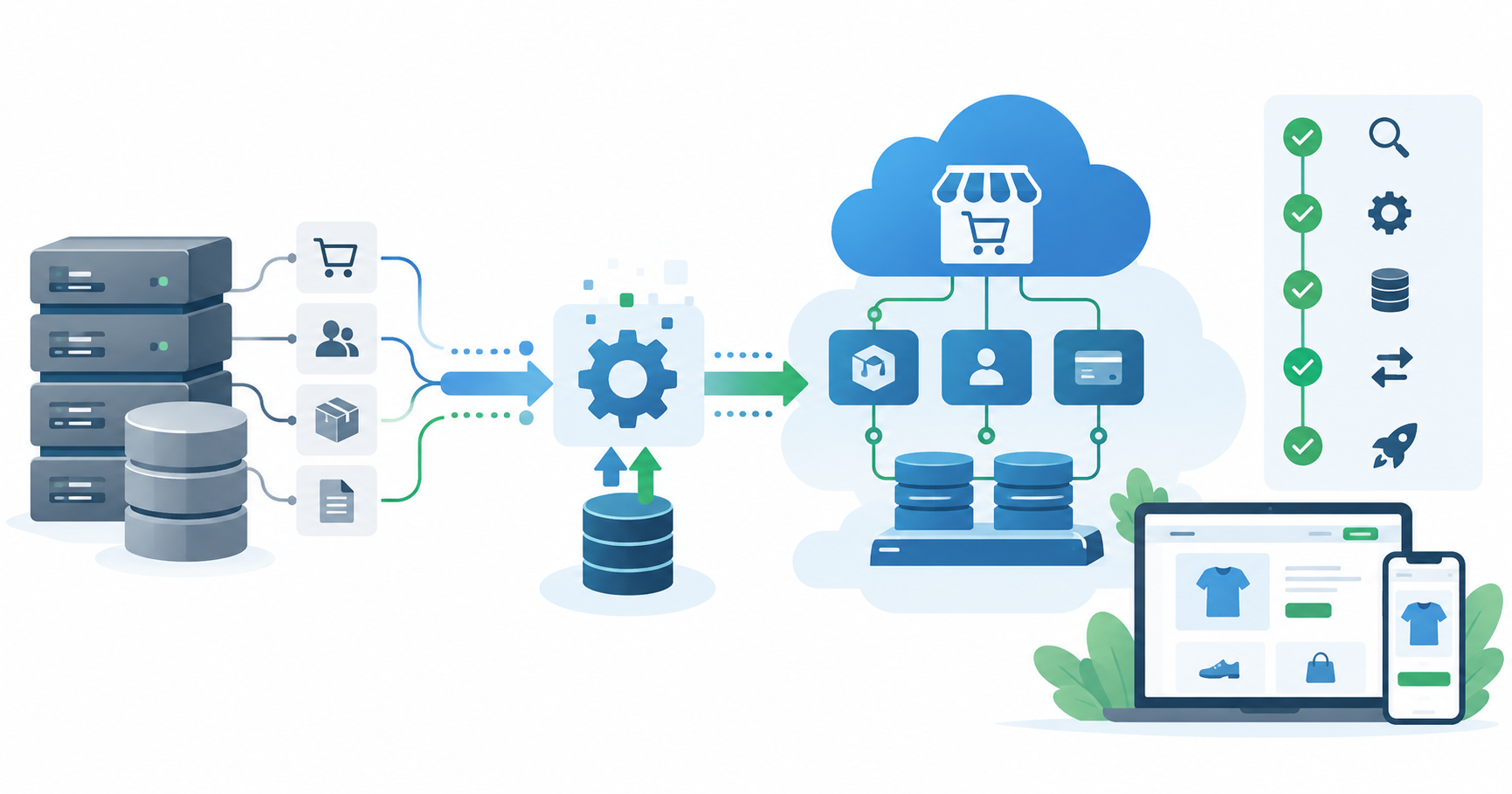
Enterprises looking to modernize legacy systems are increasingly working with offshore teams to migrate applications and data to cloud-native environments. These initiatives help organizations improve scalability, enhance system performance, reduce infrastructure costs, and support future business growth.
What Has Changed?
- Outsourcing is no longer limited to coding and maintenance tasks.
- Indian development teams are increasingly involved in product strategy, digital transformation, and business innovation initiatives.
- Organizations are relying on offshore partners to support complex healthcare, SaaS, AI, and enterprise modernization projects.
- Long-term strategic partnerships are becoming more common than project-based outsourcing engagements.
This shift reflects how outsourcing mobile app development to India has evolved from a cost-focused decision into a strategic approach for accelerating growth, innovation, and digital transformation.
Final Thoughts
Outsourcing mobile app development to India in 2026 is no longer simply a cost-saving decision. While the traditional advantages of competitive pricing, access to talent, and scalability remain largely unchanged, the outsourcing landscape has evolved through AI-assisted development, stronger compliance requirements, mature cross-platform technologies, and a greater focus on strategic partnerships.
For founders, CTOs, and business leaders, success now depends on choosing partners that can deliver not only technical expertise but also security, scalability, and long-term business value.
Frequently Asked Questions
Why do companies outsource mobile app development to India?
Companies outsource mobile app development to India to reduce development costs, access a large pool of skilled developers, scale teams quickly, and accelerate product delivery without compromising quality.
What has changed in outsourcing mobile app development to India in 2026?
In 2026, outsourcing has evolved beyond cost savings. Businesses now evaluate partners based on AI capabilities, security practices, compliance expertise, cloud-native development, and strategic product support.
Is outsourcing mobile app development to India still cost-effective in 2026?
Yes. India remains one of the most cost-effective destinations for mobile app development. However, businesses are increasingly prioritizing long-term value, expertise, and reliability over the lowest hourly rates.
How do I choose the right mobile app development company in India?
Look for partners with proven case studies, strong communication processes, security and compliance expertise, transparent pricing, and experience delivering scalable mobile applications.
Looking for the Right App Development Partner in India?
Choosing the right outsourcing partner can significantly impact the success of your mobile app initiative. Beyond technical expertise, businesses should look for partners that offer transparent communication, strong security practices, proven industry experience, and the ability to align technology decisions with business goals.
At Vedhas Technology Solutions, we help startups, enterprises, and growing businesses build scalable mobile applications through strategic consulting, product engineering, cross-platform development, cloud modernization, and compliance-focused delivery practices. As organizations increasingly invest in digital products, understanding the capabilities offered by modern mobile app development services can help decision-makers evaluate the right technology approach for their business. Our teams work closely with clients throughout the development lifecycle, ensuring transparency, quality, and long-term scalability.
Whether you’re building a new mobile product, modernizing an existing application, or evaluating outsourcing options for 2026, partnering with an experienced development team can help reduce risk, accelerate delivery, and maximize return on investment.
Why Businesses Choose Vedhas
- Transparent pricing with no hidden costs
- Dedicated in-house development teams
- Experience across healthcare, SaaS, enterprise, and digital platforms
- Strong focus on security, compliance, and scalability
- Full ownership of source code and intellectual property
Ready to Discuss Your Mobile App Project?
If you’re evaluating outsourcing options or planning a new mobile application, our team can help you assess requirements, identify potential risks, and create a practical development roadmap aligned with your business goals.
today for a no-obligation consultation and discover how the right development partnership can accelerate your product vision.