The Critical Turning Point: When Your CMS Becomes a Business Liability
Consider a mid-sized enterprise managing four corporate websites across two brands. Over five years, the team has layered in plugins for translation, forms, SEO, and custom integrations — each one solving a problem in the moment, each one adding weight to a system never designed to carry it.
The results are predictable. Page load times past four seconds. Marketing waiting two weeks for a campaign launch a competitor ships in two days. Database queries slowing under traffic that was never this high five years ago.
That is the legacy platform tax: not a single catastrophic failure, but a slow, compounding drain on speed, agility, and engineering capacity. In 2026, the compliance and performance pressures accelerating that drain have become impossible to ignore.
So is headless CMS for business the answer — or just the latest thing consultants are selling? The skeptic’s case is worth taking seriously. The migration graveyard is real — cost overruns, delayed timelines, and IT teams managing more complexity than they started with. For a single website with a small content team, the architecture is genuinely unjustifiable.
But for organizations managing multiple digital properties, regulated data environments, or content that needs to reach beyond a single website — the argument changes entirely. The question is not whether headless is better in the abstract. It is whether it is right for your specific situation, right now.
The Operational Risks of Inaction: Why Monoliths Struggle
The long-term cost of maintaining a legacy content management system is almost always underestimated at the start. Monolithic platforms bind content storage, backend administration, and frontend presentation into a single application — a design that is straightforward to set up but accumulates compounding technical debt as the organization grows.
At scale, this structural coupling creates three distinct operational risks:

- Performance degradation. Traditional platforms execute database queries and render pages in real time on every visitor request. During high-traffic events, this overhead saturates server memory — resulting in slow load times or full outages at exactly the moments that matter most commercially.
- Security vulnerabilities. A monolithic CMS exposes backend administration screens and database connections directly to the public internet. The majority of documented vulnerabilities in these ecosystems trace back to third-party plugins — the same plugins most teams rely on to extend basic platform functionality.
- Operational bottlenecks. Because presentation templates and content databases are tightly coupled, marketing teams cannot update a text block or launch a landing page without entering a developer release cycle. The dependency is structural, not a workflow problem — and it cannot be solved with better project management.
Headless CMS vs Traditional CMS: What Actually Changes Under the Hood
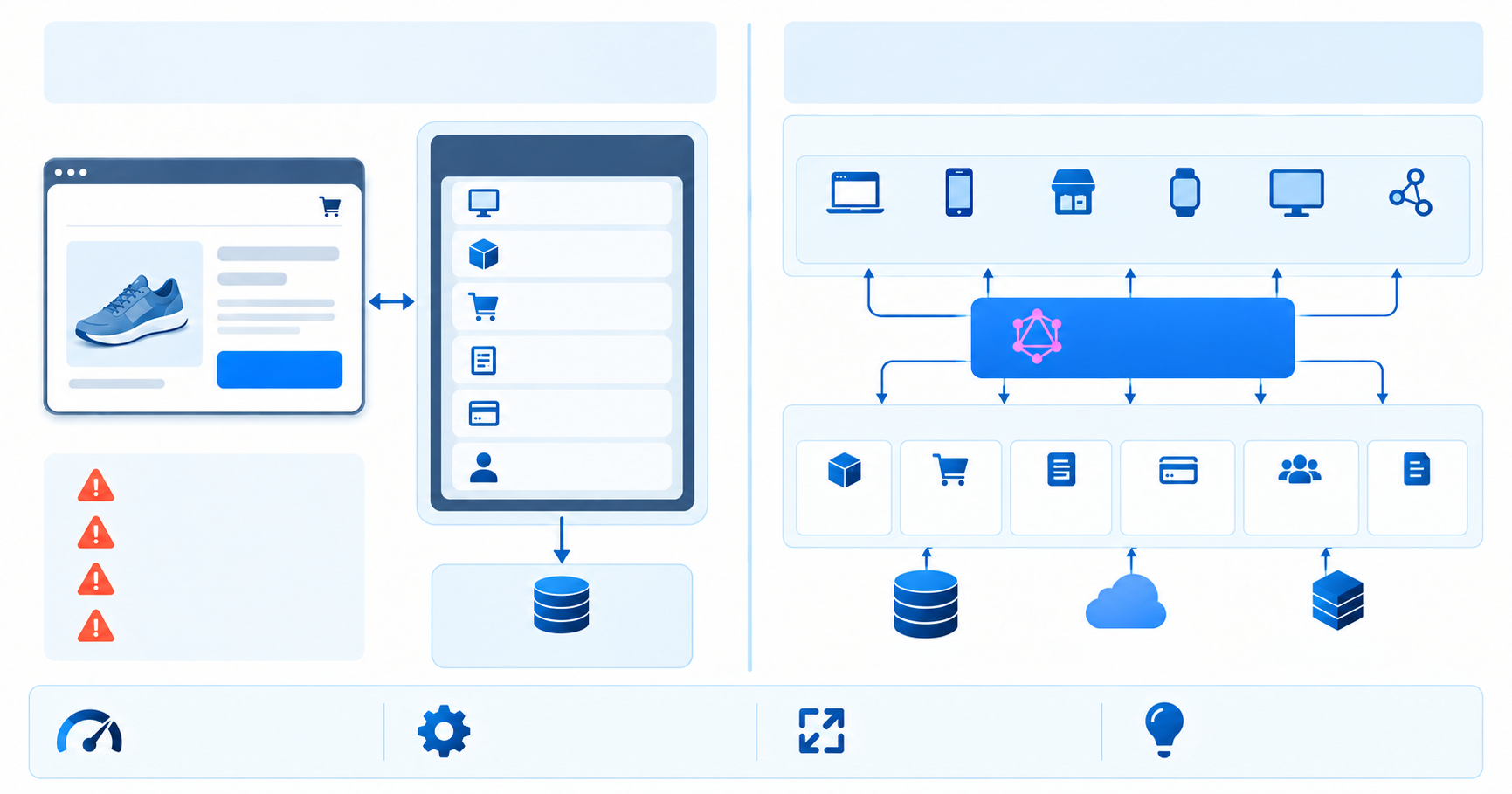
The core difference between these two architectures comes down to one question: is your content built for a single destination, or built to go anywhere?
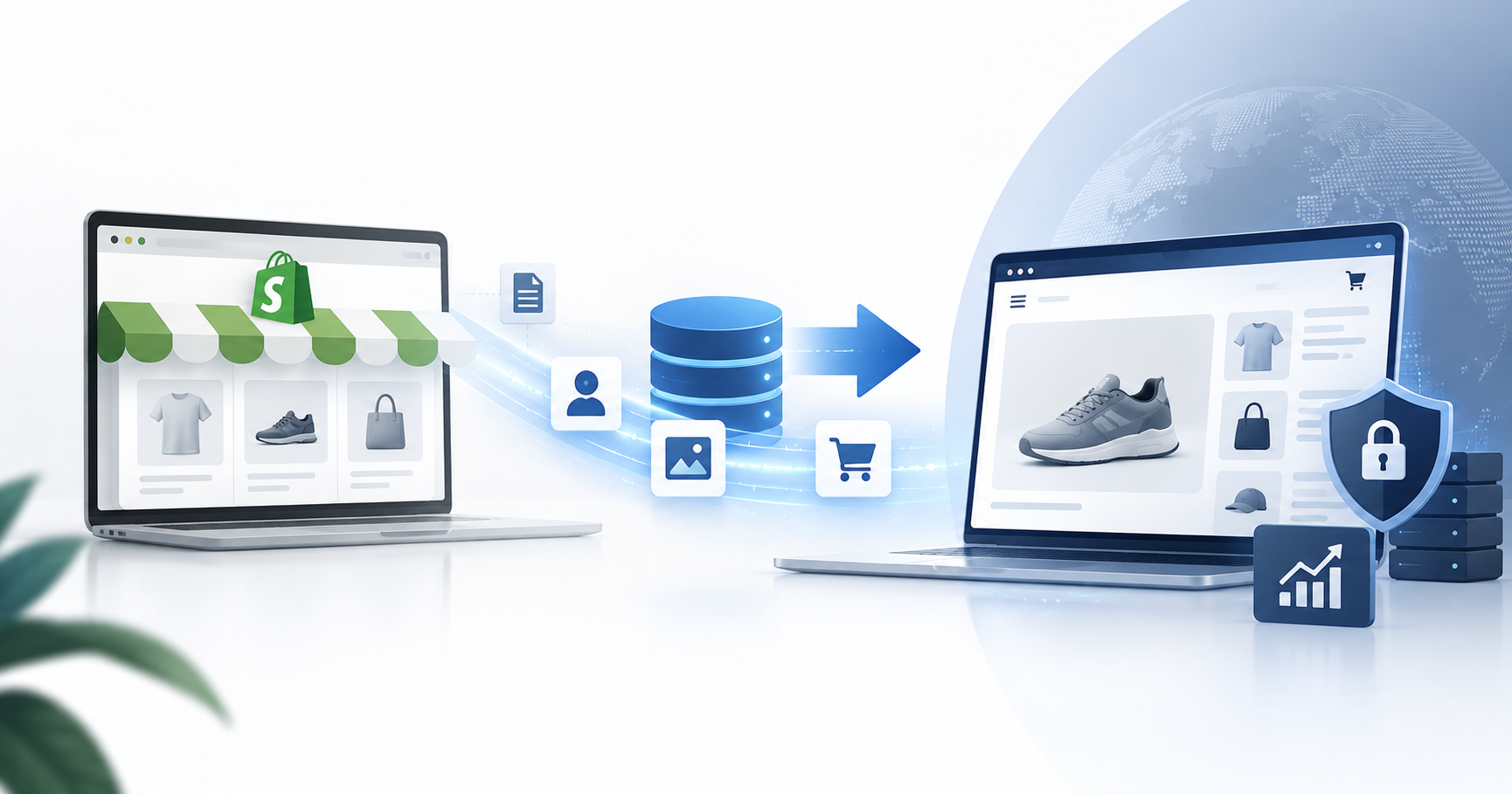
Traditional CMS. Content and design template are built as one unit. That means content formatted for your website cannot easily reach a mobile app, customer portal, or third-party platform without manual replication — and every copy creates a new maintenance burden.
API-first (headless) CMS. Content is stored once as structured, format-agnostic data and distributed automatically via REST or GraphQL APIs to any channel — websites, native apps, smart devices, email campaigns. No duplication. No manual intervention.
The difference is not just technical. One architecture multiplies your team’s workload as you grow. The other scales without adding headcount.
| Feature Evaluation | Traditional Monolithic CMS | Decoupled API-First CMS |
|---|---|---|
| Content Delivery Model | Content is formatted for and restricted to a single website template. | Content is stored as structured data and delivered via APIs to any channel. |
| Developer Framework Options | Restricted to platform-specific templates and legacy coding languages. | Complete freedom to use modern frameworks like React, Next.js, or Vue. |
| Page Speed & Edge Delivery | Server-side page generation can slow global performance. | Pre-rendered static pages can be served globally via high-speed CDNs. |
| Security and Regulatory Risk | Public-facing systems have direct database access, increasing security risks. | Databases are isolated from the frontend behind secure APIs. |
| Initial Deployment Cost | Low upfront development complexity; faster initial setup. | Requires structured data design and custom frontend development. |
| Ongoing Maintenance Cost | High ongoing maintenance costs for security patches and plugins. | Predictable maintenance costs; lower infrastructure overhead over time. |
Quick Verdict: Is Headless CMS Right for Your Business?
A headless CMS is the right choice for organizations that need to deliver content across multiple digital channels, meet strict security and compliance standards, or achieve consistently fast page performance at scale. For enterprise teams managing complex digital ecosystems—multiple websites, native apps, customer portals, or regulated data environments—the architectural advantages outweigh the higher upfront development investment.
For businesses running a single corporate website with standard content needs and no compliance requirements, a traditional monolithic CMS remains the more practical and cost-effective option.
The decision ultimately comes down to three questions: How many channels do you publish to? How quickly must your compliance posture evolve? How much engineering capacity is currently being consumed by platform maintenance instead of product development?
Headless CMS for Business: Benefits in Regulated Industries
For organizations in regulated industries, the architectural shift delivers on two fronts simultaneously. Content centralization means a single update — a policy change, a product announcement, a compliance notice — distributes automatically to every connected channel without manual replication. And because the public-facing frontend is fully separated from backend databases, the attack surface that keeps security teams up at night is structurally removed, not patched over.

Is a Headless CMS Right for Your Organization? Four Signals That Say Yes
Headless migrations are not universally necessary. For businesses running a single website with stable content and no compliance obligations, the complexity is genuinely unjustifiable. But for organizations where content operations are actively slowing the business down, four signals consistently indicate that a migration is the right move.
- You’re publishing to more than one channel.
If your content needs to reach a website, a mobile app, a customer portal, or any combination of digital touchpoints — and your team is manually replicating updates across each one — a decoupled architecture solves this structurally. Content is authored once and distributed automatically to every connected channel via API. - Platform performance is affecting revenue or search rankings.
When global traffic spikes cause server delays, or when basic updates to one property risk breaking integrations on another, the monolithic system has hit its ceiling. Headless architectures serve pre-rendered pages from global CDNs, scaling traffic load without scaling infrastructure costs. - Marketing is waiting on development for routine tasks.
If campaign launches, copy updates, or landing page changes require a development ticket, the problem is architectural — not a workflow issue that better project management will fix. A well-implemented headless setup gives editors visual page-building tools while developers retain control over the underlying code structure. Both teams move independently. - Compliance requirements are outgrowing your current security posture.
SOC 2 Type 2, GDPR, and HIPAA all require isolation between public-facing systems and sensitive data. A monolithic CMS — with its direct database exposure through public-facing pages — makes that isolation difficult to achieve and harder to audit. Decoupling the frontend from the database removes the most common attack surface and simplifies compliance documentation significantly.
If two or more of these signals apply to your organization today, the case for migration is strong. If none apply, it probably isn’t the right time.
Security, Compliance, and Implementation: What Enterprise Teams Need to Know
For Healthcare and Regulated Industries
For healthcare organizations and medical technology providers, the architectural argument for headless is not just operational — it is regulatory.
Proposed 2026 updates to the federal HIPAA Security Rule eliminate the historic distinction between “required” and “addressable” safeguards, converting most specifications into firm, uniform requirements. Covered entities must now implement multi-factor authentication, network segmentation, and encryption of all electronic protected health information both at rest and in transit — across every connected public-facing system.
A decoupled architecture directly addresses this. Because the public-facing website is hosted statically on a CDN, public web traffic has no direct path to internal databases. Patient data sits behind an authenticated API gateway, isolated from the frontend entirely. That structural separation is what makes HIPAA audit documentation manageable — the compliance surface area is smaller, cleaner, and easier to evidence.

SOC 2 Type 2: The Enterprise Buyer’s Standard
For organizations outside healthcare, SOC 2 Type 2 is the benchmark that matters most in vendor evaluation. Unlike ISO 27001 — which validates that a security management system is properly designed — a SOC 2 Type 2 report verifies that security controls are operating effectively over an extended testing period, typically six to twelve months.
When selecting a content platform, a SOC 2 Type 2 attestation is independent confirmation that security practices, access logging, and incident response protocols are consistently maintained — not just documented.
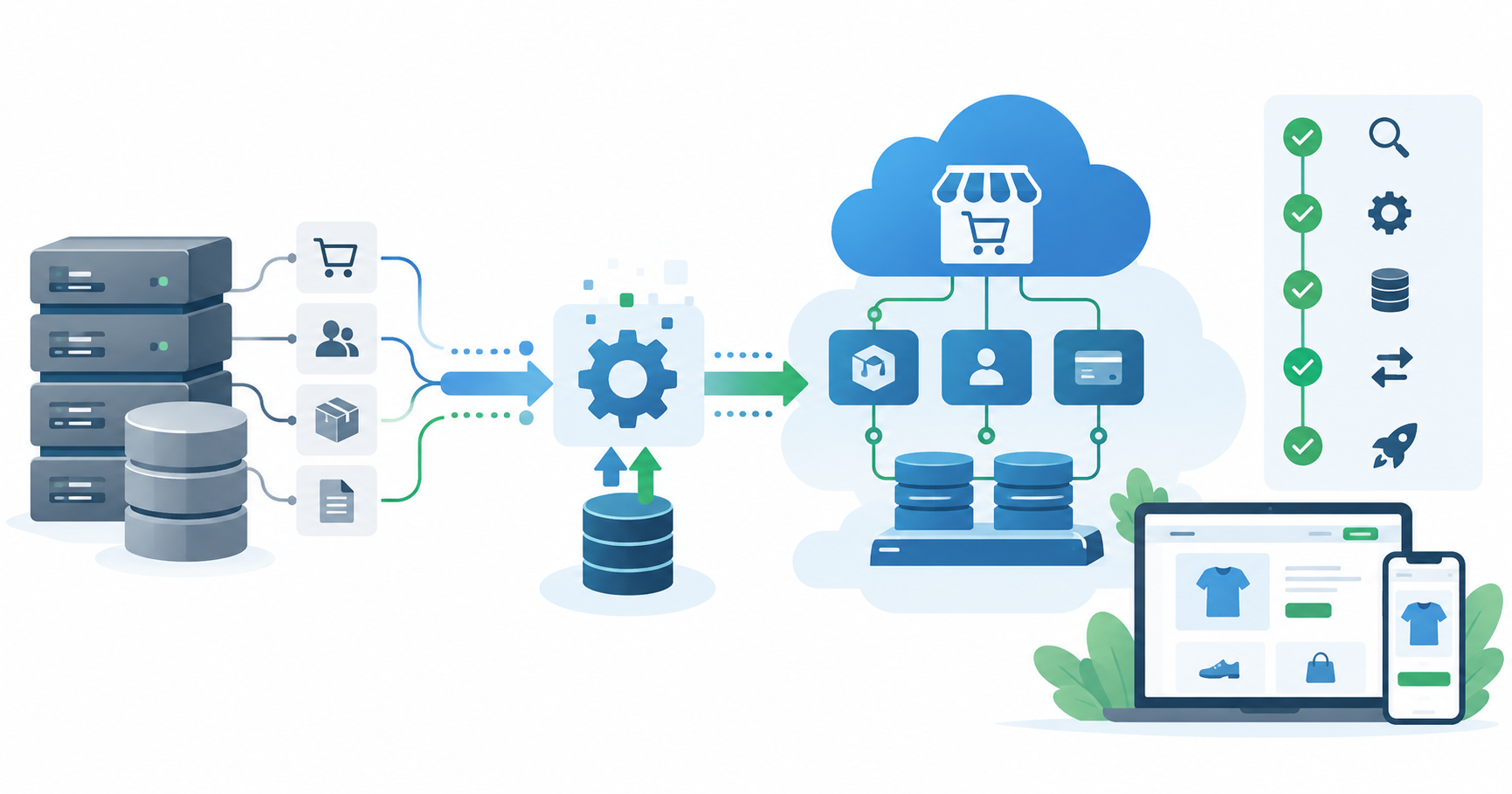
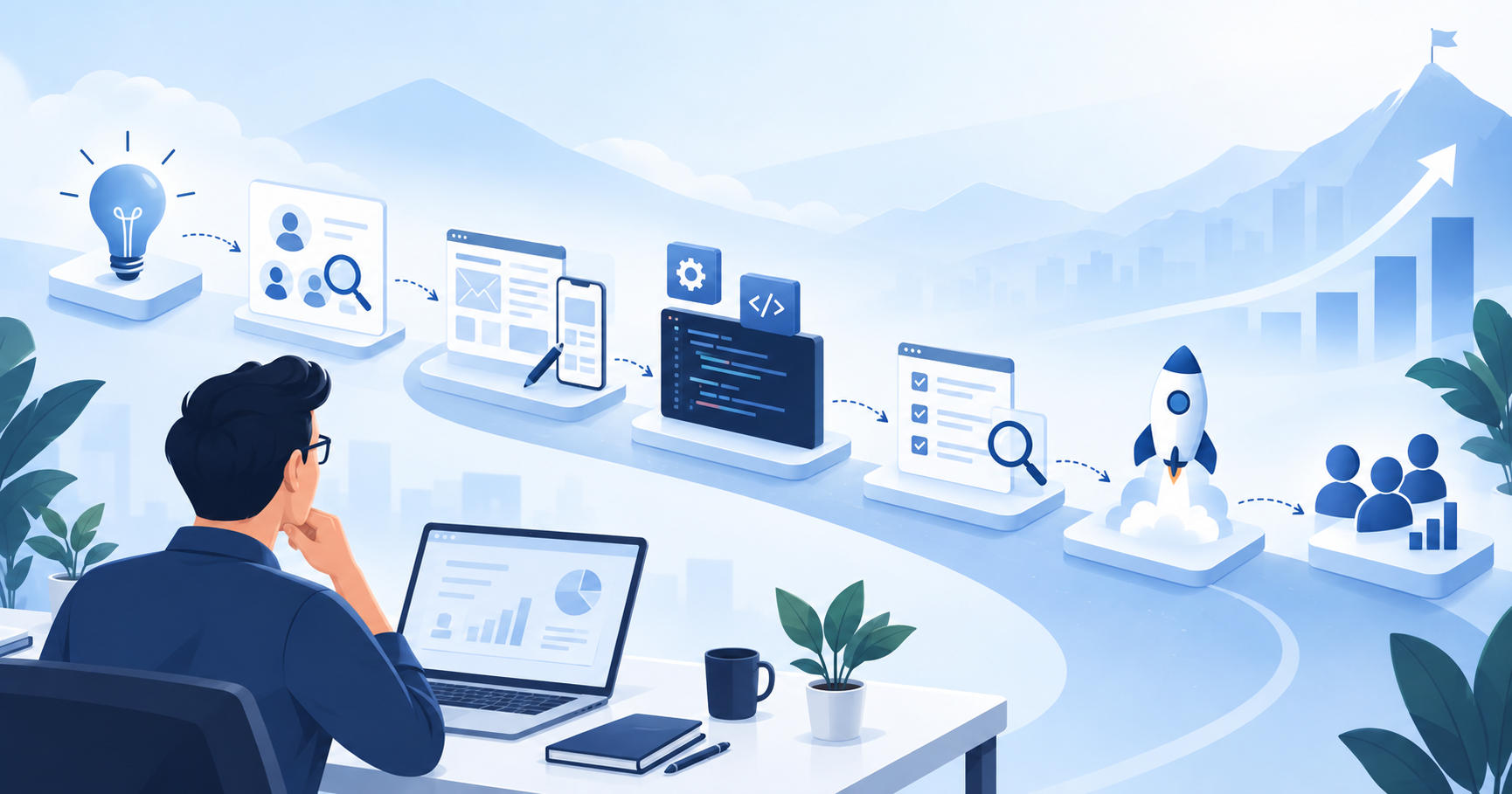
The Implementation Roadmap: How a Migration Actually Works
A headless migration done correctly is a structured, phased process—not a lift-and-shift. Just like a successful Cloud Migration Strategy, it begins with careful planning, infrastructure assessment, and phased execution rather than moving everything at once. At Vedhas, the modernization process is designed around four principles: no data loss, no SEO regression, no compliance gaps, and no surprise costs.

Timeline reflects a standard mid-market implementation. Enterprise migrations with complex integrations, multi-region requirements, or regulated data environments are scoped individually following the Phase 1 discovery and audit.
- Phase 1 — Discovery and audit (weeks 1–2): Every legacy content structure, database dependency, and third-party integration is documented. An Infrastructure Readiness Assessment establishes the baseline before a single line of new code is written.
- Phase 2 — Schema and content modeling (weeks 3–5): Structured content schemas are designed to support omnichannel delivery from day one. Staging environments and sandbox configurations are stood up before any production system is touched.
- Phase 3 — Frontend development and API integration (weeks 6–10): High-performance frontends are built using modern frameworks and connected to the headless backend via secure, authenticated APIs. Content editors are onboarded during this phase — not after go-live.
- Phase 4 — Validation, testing, and deployment (weeks 11–12): Security audits, accessibility reviews, and performance tuning run in parallel before launch. Static assets are deployed to global CDNs for low-latency delivery across every target market.
A structured content schema — the backbone of Phase 2 — defines each content type as programmable, validated data. This is what enables strict input controls, role-based access, and secure API distribution across every channel the organization publishes to. The technical implementation follows industry-standard patterns; the strategic value is in designing the schema correctly before build begins.
Your Legacy CMS Is Costing More Than You Think
Traditional CMS platforms render pages through live database queries on every visitor request. During traffic spikes, that processing load drives compute costs up across AWS, GCP, and Azure — and scales with every campaign and product launch.
A decoupled architecture removes most of that overhead. Pages are pre-rendered and served from global CDN edge caches, reducing origin server load significantly. The cost impact is real: CDN bandwidth delivery runs 20–50% cheaper than direct cloud egress on equivalent traffic volumes, based on infrastructure benchmarks tracked across major providers in 2025.
But bandwidth savings are only part of the story. Analysis of 50+ enterprise headless migrations found that the total cost of ownership advantage reaches $500K–$1M over three years — driven by reduced infrastructure overhead, lower maintenance burden, and elimination of recurring plugin and middleware licensing costs.
On the maintenance side, legacy platforms demand ongoing developer attention for plugin conflicts, database updates, and security patches — engineering hours that cannot be spent on product development. A managed headless CMS shifts that burden to the platform provider entirely. The productivity impact is documented: 58% of organizations report higher productivity and reduced content management time after migrating to headless, and 61% report increased ROI within the first implementation cycle.
For teams where developer time is the scarcest resource, that last number matters more than any infrastructure percentage.
Why Your Next Headless Migration Should Be Built by Vedhas
A headless migration requires structured content modeling, custom frontend development, secure API integration, and a team that has navigated the failure modes before — not one learning on your budget.
Since 2017, Vedhas has delivered custom software development, application modernization, and cloud infrastructure projects across healthcare, B2B SaaS, and digital commerce. The dual US-India delivery model keeps strategic oversight close to the client while engineering runs at competitive cost and pace.
Technical execution that is migration-specific. Vedhas builds production frontends using React and Next.js, handles the content schema design that most migrations get wrong before the build begins, and connects headless backends via authenticated APIs — including in regulated environments where compliance documentation is a non-negotiable deliverable.
Governance that protects your budget. Every engagement starts with a scoped discovery phase before any code is written. Estimates are milestone-based, progress updates are weekly and written, and scope conversations happen early — not at go-live.
Support that extends past launch. Post-deployment review, performance monitoring, and continuous optimization are standard — because a headless architecture only compounds in value if it is maintained correctly after the build.
One Decision. Significant Consequences. Make It with the Right Information.
Modernizing your content infrastructure is not a decision to make on instinct. The architecture you choose today will determine how fast your team moves, how cleanly you pass security audits, and how much of your engineering budget goes toward maintenance versus growth — for the next five to seven years.
To help technical and business decision-makers build a defensible internal case, Vedhas Technology Solutions has put together a practical, no-fluff checklist built specifically around 2026 compliance requirements and enterprise migration realities.
Download the 2026 CMS Migration Readiness Checklist
Built around proposed HIPAA updates, SOC 2 Type 2 requirements, and real enterprise migration timelines.
What is inside:
- A 25-point readiness assessment mapped to the four decision signals covered in this guide
- Security and compliance checkpoints aligned to proposed 2026 HIPAA updates and SOC 2 Type 2 standards
- Performance benchmarks to target before, during, and after migration
- A risk planning framework to prevent SEO regression and downtime during go-live
The case for headless is not universal — but for organizations managing multiple digital properties, operating under compliance pressure, or losing engineering hours to platform maintenance, the question is no longer whether to migrate. It is whether to migrate now or later, under more pressure, with less runway. If two or more of the signals in this guide describe your organization today, later is the more expensive choice.
Frequently Asked Questions
Can you migrate to a headless CMS without redesigning your website?
Yes. A headless CMS migration and a website redesign are separate initiatives. In many cases, organizations migrate their content management architecture while preserving the existing frontend design. This approach minimizes disruption, reduces project costs, and allows businesses to modernize their backend before planning a visual redesign.
How do you measure the ROI of a headless CMS implementation?
The return on investment comes from multiple areas rather than a single metric. Organizations typically measure improvements in page performance, reduced maintenance costs, faster content publishing, lower infrastructure overhead, improved developer productivity, and increased revenue from better user experiences. Tracking these KPIs before and after migration provides a clear picture of business value.
What are the biggest risks during a headless CMS migration?
The most common risks include incomplete content migration, SEO ranking losses, broken API integrations, insufficient content modeling, and user adoption challenges. These risks can be significantly reduced through proper discovery, phased implementation, comprehensive testing, and maintaining URL structures and redirects during migration.
Should you build a custom headless CMS or use an existing platform?
For most organizations, using an established headless CMS platform is the faster and more cost-effective option. Building a custom solution is generally justified only when the business has highly specialized workflows, strict regulatory requirements, or unique integration needs that commercial platforms cannot adequately support.
Can a headless CMS support future digital channels beyond websites and mobile apps?
Yes. One of the primary advantages of a headless CMS is its ability to deliver structured content through APIs to virtually any digital touchpoint, including smart devices, customer portals, digital kiosks, voice assistants, wearables, and future platforms without requiring content to be recreated for each channel.